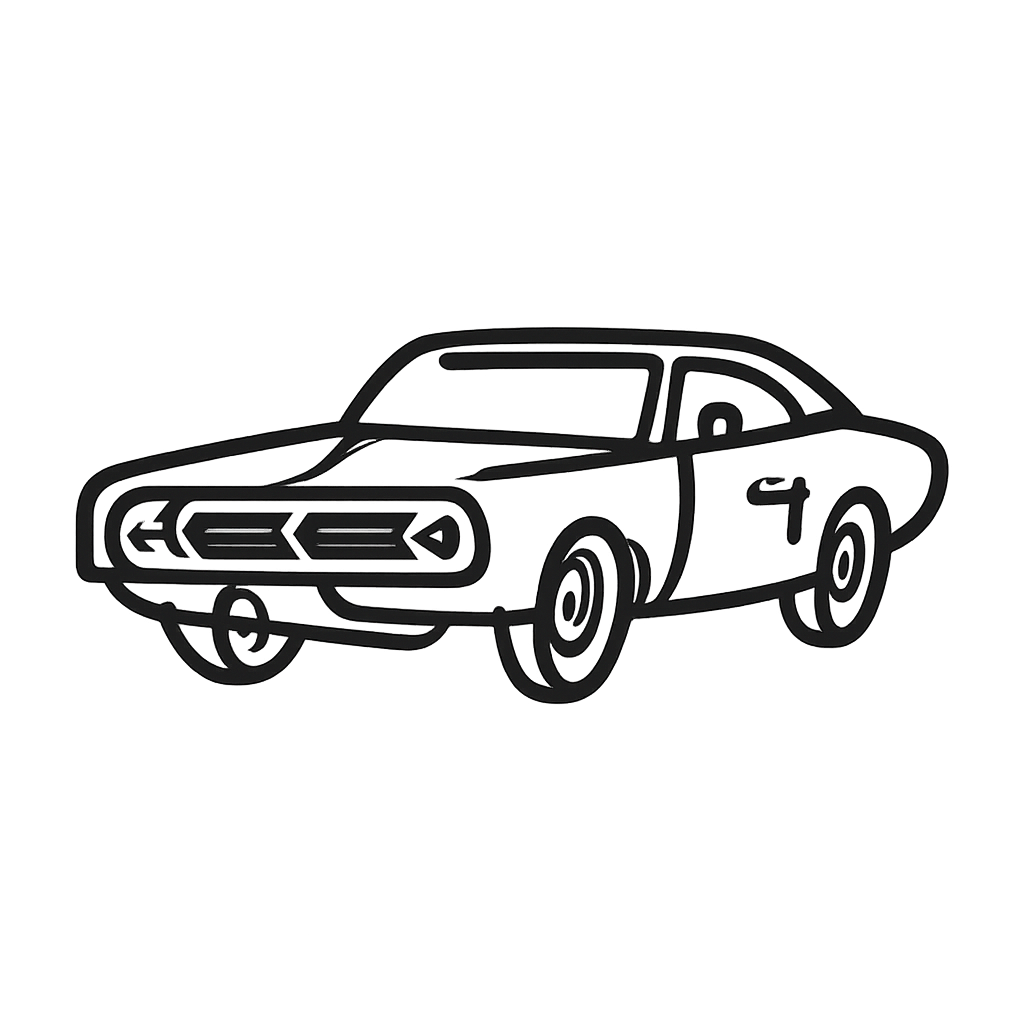
Spark plugs are small but critical components in any internal combustion engine, responsible for igniting the air-fuel mixture that drives the pistons and, ultimately, the entire vehicle. For Mopar muscle cars—Chrysler’s performance-oriented vehicles from the late 1960s and early 1970s—spark plug performance wasn’t just about reliability; it was about unlocking power, durability, and throttle response. Let’s break this down fully and then explain why Champion spark plugs were such a natural fit for these legendary engines.
What Do Spark Plugs Do?
1. Basic Function
- Spark plugs sit at the top of each cylinder in the combustion chamber.
- At the proper moment in the engine’s cycle, they pass a high-voltage spark across a small gap, igniting the compressed air-fuel mixture.
- That controlled burn forces the piston downward, delivering power to the crankshaft.
2. Key Spark Plug Components
- Center Electrode: Conducts electricity from the ignition system.
- Ground Electrode: Completes the gap for the spark to jump across.
- Insulator: Typically ceramic, it prevents arcing and maintains proper spark focus.
- Shell: Threads into the cylinder head and conducts heat away from the plug.
3. Important Specs
- Heat Range: Describes the plug’s ability to dissipate heat. Too hot can cause pre-ignition; too cold can lead to fouling.
- Gap Size: The space between the electrodes, which affects how much voltage is needed to create a spark.
- Reach: Thread length; must match the cylinder head design.
- Material: Copper, platinum, and iridium are common, each with pros and cons.
Mopar Muscle Cars: Spark Plug Demands
Chrysler’s big-power engines—especially the 426 HEMI, 440 Six-Pack, and 340 small-block—were high-compression, high-output beasts. These engines had specific spark plug demands:
ishImmediately
Slug
1. High Compression Requires Reliable Spark
- Combustion pressures were greater, especially with factory compression ratios often exceeding 10:1.
- Spark plugs needed to resist fouling and heat soak but still fire reliably under intense cylinder pressures.
2. Durability at High RPM
- Muscle Mopars were built to rev—think drag racing, street battles, and spirited driving.
- Spark plugs had to withstand sustained high-RPM operation without breakdown or electrode erosion.
3. Compatibility with Ignition Systems
- Most Mopars of the era used breaker-point ignition systems, and later electronic ignition in the early 1970s.
- Spark plugs needed to perform well with relatively low-coil output and older ignition designs.
Why Mopars Ran Well on Champion Spark Plugs
Champion was Chrysler’s go-to spark plug brand for decades—especially during the muscle car era. Here’s why they were such a strong match:
1. Factory Spec and Supplier
- Champion was the OEM (Original Equipment Manufacturer) for Chrysler during the muscle era.
- Most big-block and HEMI Mopars rolled off the factory floor with Champion plugs already installed (e.g., Champion J11Y or N14Y for small-blocks and big-blocks).
- Chrysler tuned their ignition systems and combustion chambers around Champion plug specs.
2. Copper Core Performance
- Champion plugs used copper-core electrodes that offered:
- Great thermal conductivity
- Excellent spark performance at a reasonable price
- Fast heat dissipation, ideal for high-compression engines
3. Heat Range Tuning
- Champion offered a wide range of heat ranges (e.g., J6, J8, J11, etc.), letting tuners and racers dial in the perfect plug for street, strip, or track.
- Mopar crew chiefs often selected colder plugs for racing (to resist pre-ignition) and hotter plugs for street (to prevent fouling during idle and part-throttle).
4. Racing Heritage and Proven Results
- Champion’s presence in NHRA, NASCAR, and Trans-Am circuits gave them credibility among racers and builders.
- Mopar teams—whether factory-backed or independent—trusted Champion plugs in their 426 HEMIs and 440 wedge engines because they worked.
Examples of Champion Plugs in Mopar Muscle Cars
| Engine | Stock Plug | Notes |
| 426 HEMI | Champion N6Y | Cold heat range for high compression |
| 440 Magnum/Six Pack | Champion J11Y or N14Y | Common for both street and drag strip |
| 340 Small Block | Champion J11Y | Good balance of heat and durability |
| 383 Magnum | Champion J11Y | Hotter plug for smoother cold starts |
| Slant 6 | Champion J14Y | Higher heat range, good for daily driving |
Final Thoughts
Champion spark plugs helped define the Mopar muscle era not just because they were “stock,” but because they were ideal for the performance needs of the day. Their copper-core design, robust build quality, and wide range of heat ratings made them a go-to choice for both factory performance and grassroots racing.
Modern spark plugs may use exotic materials like iridium or platinum, but if you’re restoring a vintage Mopar or tuning it for classic-style performance, Champion plugs still offer a period-correct and performance-proven solution.
 Mopower Garage
Leave a comment