By Fletcher P. Kuykendall Episode – 6
September 1990 didn’t just mark the end of another hot summer of street racing and greasy hands for Johnny B. Whiskey—it marked the beginning of something entirely different. The kind of shift that hits a man somewhere deeper than gears and gasoline. The type of shift that comes when the road ahead starts to matter just as much as the road behind.
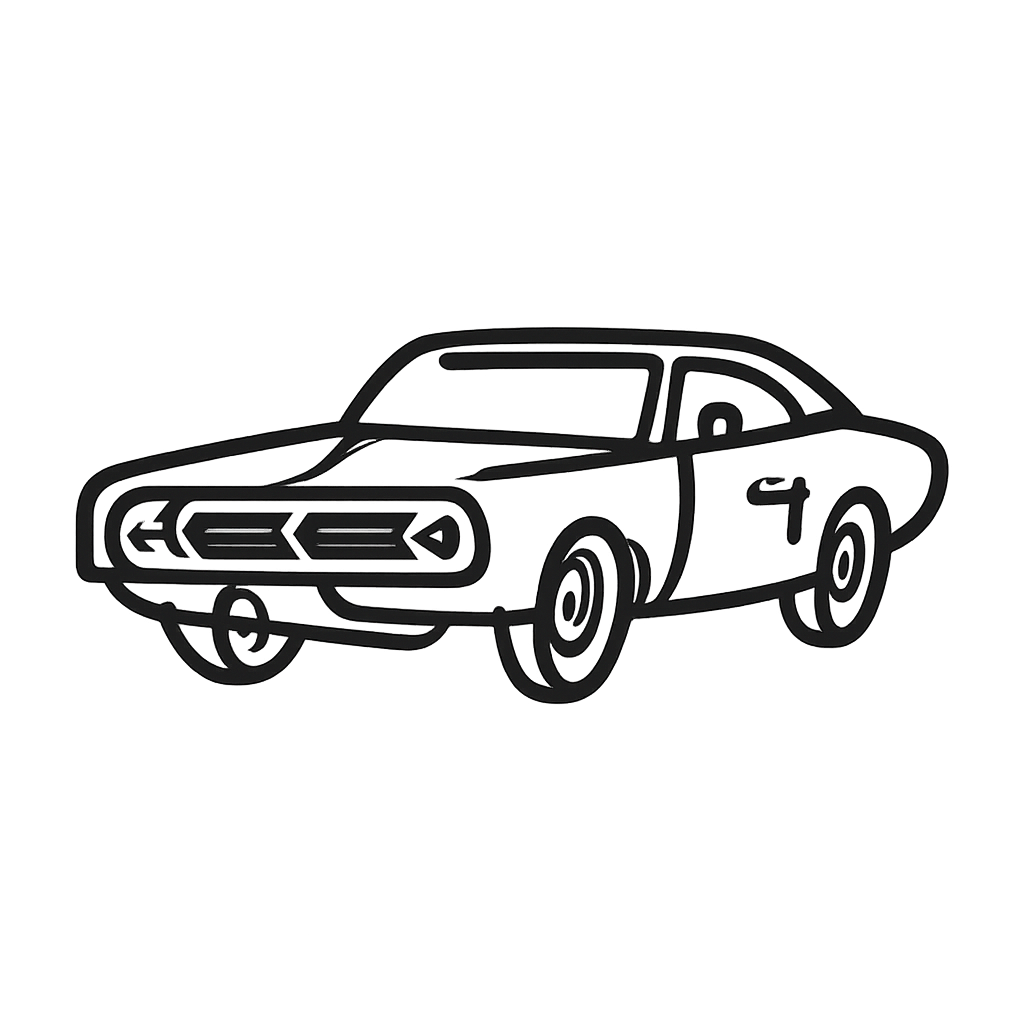
Jennifer had already packed her bags for her junior year of college—the third year in a four-year run toward a degree in education. She had her nose in textbooks and dreams of a classroom of her own. Meanwhile, Johnny had grease under his nails, a suspicious tick in his 340 Dart’s valvetrain, and a sense that time wouldn’t wait around for him anymore.
The feed mill where he’d worked since high school was closing. Another casualty of automation and shifting times. He could’ve chased another blue-collar gig, sure, but Jennifer’s words stuck with him one night as they lay on the hood of his Dart, staring up at the stars:
“You’ve got something, Johnny. It’s not just turning wrenches. You understand machines. You should do something with it.”
That’s how Johnny B. Whiskey, street racer and backyard mechanic, found himself walking into his first day of trade school at Mid-State Technical College, clutching a cheap spiral notebook and wondering how the hell he was supposed to fit in.
He didn’t. Not right away.
Most of the other guys were fresh out of high school or older guys getting retrained. With his sunburnt neck and beat-up boots, Johnny felt like an outsider in both directions. But that changed the day he met Mr. Avstar.
Professor Martin Avstar was a walking encyclopedia of internal combustion engines and a former Walker Exhaust and Ford engineer with a voice like sandpaper and a demeanor as serious as a torque wrench on final pull. He noticed Johnny almost immediately, mainly because Johnny wasn’t afraid to challenge the book.
“Vacuum advance should be used with a performance camshaft regardless of the mechanical advance or the fuel grade,” Johnny piped up during fuels and emissions theory one day disagreeing with the book stating vacuum advance should not be used with an aftermarket camshaft.
Mr. Avstar raised an eyebrow. “And what makes you say that?”
“My Dart runs a 340 with a bunch of initial timing and a shortened mechanical curve. Not taking advantage of vacuum advance keeps the total timing at 36 to 38 degrees, and part throttle fuel economy suffers. I experimented for weeks.”
Avstar leaned on his desk. “What kind of distributor?”
“Dual-point. I set the dwell manually. Used my dad’s old Sun machine.”
There was a pause.
“You got that Dart out in the parking lot?”
Johnny nodded.
“Let’s go take a look.”
That parking lot walk would shape the next two years of Johnny’s life.
Avstar stood there in the crisp fall air, peering into Johnny’s open hood like he was examining an old friend. He admired the Six-Pack manifold, the meticulous wire routing, and the improvised cold-air duct Johnny had rigged from an old HVAC vent.
“You don’t just fix cars,” he finally said. “You speak machine.”
That single sentence hit Johnny harder than any quarter-mile victory ever had.
From that day forward, Avstar took Johnny under his wing. He introduced him to diagnostic theory beyond what Johnny had ever imagined—oscilloscopes, scan tools, emission controls, and the emerging whispers of OBD systems. Johnny soaked it up like a dry shop towel in a puddle of antifreeze.
Jennifer, meanwhile, encouraged him every step of the way. Though their lives began to look different—her evenings full of library sessions and lesson plans, his spent chasing electrical gremlins in lab cars—they always found time on weekends. Sometimes, she’d quiz him with flashcards with technical definitions; sometimes, he’d bring her coffee while she outlined lesson plans.
They fell asleep on her mom’s couch more than once with a Chek Chart manual on one lap and a college textbook on the other.
Johnny’s respect for the trade grew, not just because of what he learned, but because of what he began to imagine. Maybe he could open his own shop. Maybe he could specialize in performance tuning or restorations. Maybe, just maybe, he could teach one day, like Mr. Avstar.
It was Avstar who pushed Johnny to enter a state-wide competition in advanced diagnostics during the spring semester. Johnny hesitated at first—he never liked the spotlight unless it came from headlights on a back road, but with Jennifer’s and his professor’s encouragement, he entered.
He took first place.
The prize? A scholarship extension and a summer internship at a local performance garage specializing in classic Mopars.
Late one night that spring, Johnny and Jennifer sat under the stars again, much like they had months earlier, but now the mood was different. Grounded. Focused.
“I can see it now,” Johnny said. “A little shop off Route 12. Dyno in the back. You teaching third graders during the day, me tuning big blocks at night.”
Jennifer smiled and squeezed his hand. “Just don’t name it ‘Whiskey’s Wrenchin’.”
“No promises.”
Johnny B. Whiskey didn’t stop being a racer or a rogue. But trade school, Mr. Avstar, and the looming reality of life with Jennifer gave him something new, direction.
He’d always had the fire. Now, he had the fuel to keep it burning.
And somewhere in a quiet corner of that old garage lab, under the hum of fluorescent lights and the scent of brake cleaner, a young man who once lived for quarter-mile thrills had begun the long, rewarding journey of building something that lasted far longer than a green light and a burst of speed.
 Mopower Garage
Leave a comment