Published by Christopher J. Holley | Mopar History & Tech | August 2025
When people discuss Mopar dominance in the 1960s, the discussion typically centers on horsepower: the legendary Hemi, Max Wedges, and wedge-head big blocks that terrorized drag strips nationwide. But ask anyone who ran a Dodge or Plymouth down the quarter mile back then, and they will tell you the real secret weapon was not just under the hood, it was hiding under the rear of the car.
We are talking about Chrysler’s unique rear leaf spring design. While Ford and GM fans wrestled with axle hop and scrambled traction, Mopar racers found that their cars hooked harder and straighter, often with little more than a tire pressure adjustment.
The Asymmetrical Advantage
Most manufacturers in the 1960s used symmetrical leaf springs, where the axle sat roughly in the middle, with equal-length segments stretching forward and backward. Chrysler engineers took a different approach.
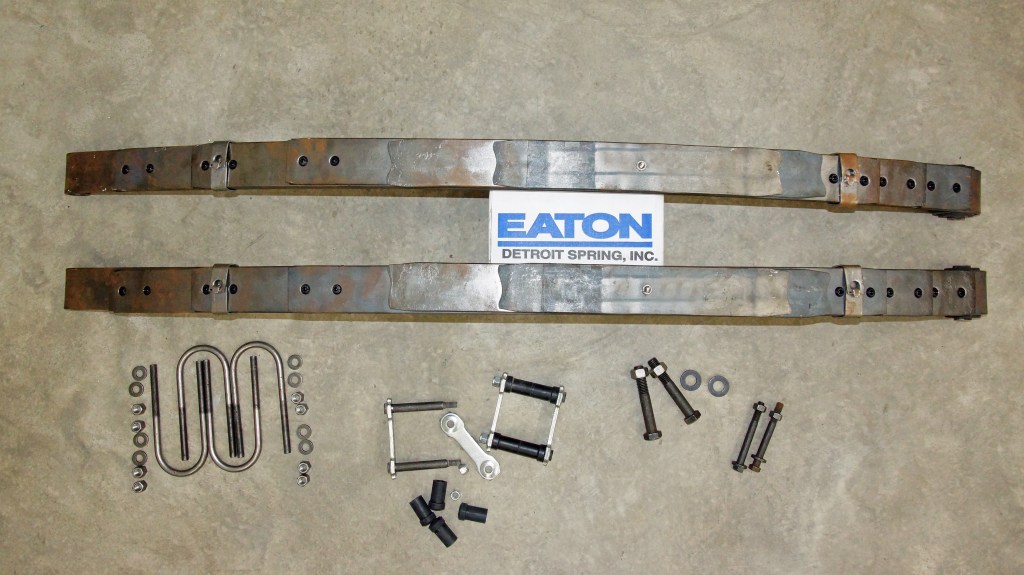
They designed asymmetrical leaf springs, shorter and stiffer in front of the axle, longer and more flexible behind it. The short front section acted like a built-in traction bar, keeping the axle from winding up under hard launches. The longer rear half kept the ride livable for everyday driving. It was a brilliantly simple solution that gave Mopars a launch advantage right off the showroom floor.
Drag racer Dick Landy once summed it up perfectly: “With a Mopar, you didn’t need to weld on a bunch of bars just to get it to hook. The factory already thought about traction before we ever got to the strip.”
Built-In Traction, No Add-Ons Required
Chevy and Ford racers quickly learned that their coil-spring or symmetrical leaf setups needed improvement. Slapper bars, homemade traction bars, and all sorts of hardware appeared in the pits. Mopar racers? Not so much.
Because Chrysler springs already managed axle wind-up, many Dodge and Plymouth drivers could bolt on slicks and head straight to the staging lanes. The cars transferred weight smoothly and planted the rear tires like they were purpose-built for drag racing.
Ronnie Sox, half of the legendary Sox & Martin team, put it bluntly: “We never fought wheel hop like the Chevy guys. The Mopars just went straight.”
The Super Stock Secret
Chrysler did not stop with a clever stock design; they doubled down for the racers. Through their parts program, the forerunner of Mopar Performance, they offered Super Stock springs over the counter. These were heavy-duty, staggered-leaf packs designed purely for traction.
Factory Super Stock Dodges and Plymouths came equipped with them, but even a weekend warrior could walk into a dealership and buy a set that was NHRA legal. It was plug-and-play performance, decades before the term existed.
As racer Herb McCandless recalled: “You could pick up those Super Stock springs right at the parts counter. Bolt them in on Saturday, and on Sunday, you were competitive.”
Simple, Strong, and Effective
Part of the brilliance was in its simplicity. Chrysler’s leaf springs did everything: carried the weight, located the axle, and managed traction, all in one package. No extra arms, no complex linkages. Just rugged hardware that worked on the street and dominated the strip.
Mopar’s Edge in the Muscle Car Wars
It is tempting to credit Chrysler’s success in the ’60s and ’70s solely to monster engines like the Hemi. But the truth is, Mopar’s engineers knew horsepower meant nothing if you could not plant it on the pavement.
Their asymmetrical leaf-spring design gave Dodge and Plymouth racers the edge when it mattered most, the first 60 feet. And in drag racing, that was often the difference between winning and losing.
That is why so many Mopars launched straight, hard, and true while the competition was busy spinning or hopping down the lane. As Landy, Sox, and McCandless all proved, Chrysler’s clever suspension design was not simply sound engineering; it was race-winning engineering.
So, the next time you see a Mopar leave the line with the nose in the air and the rear tires digging in, remember it is not just the Hemi doing the work. It is those Chrysler leaf springs, still showing why clever engineering beats brute force every time.
 Mopower Garage
Leave a comment