Published by Christopher J. Holley | Mopar History & Tech | August 2025
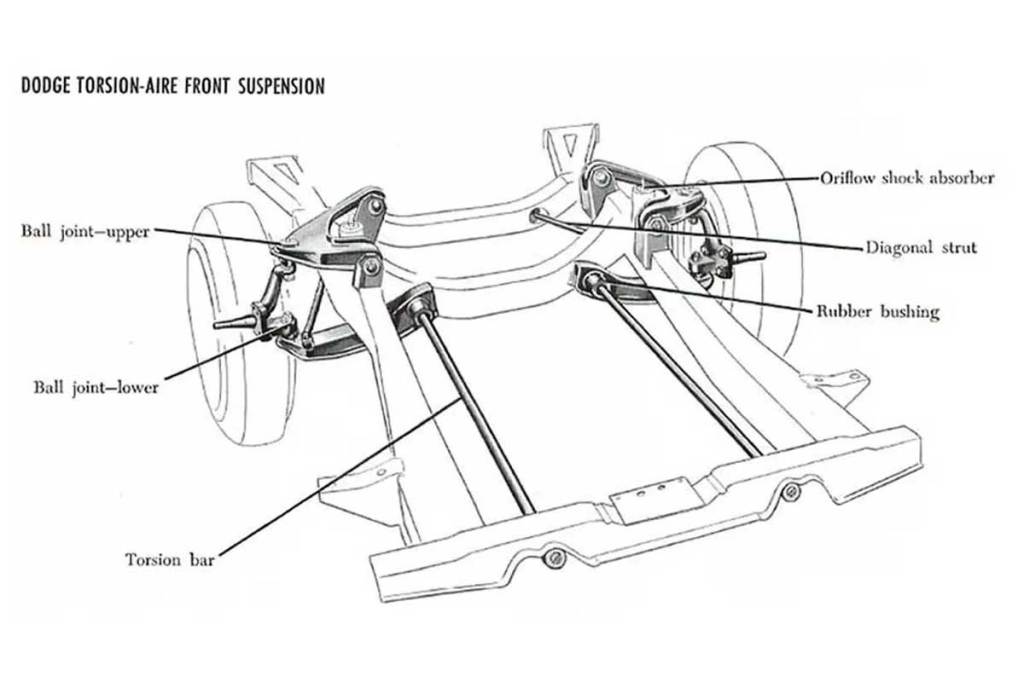
When you pop the hood on a 1960s or 1970s Mopar muscle car, one thing immediately sets it apart from its Ford and GM rivals: you will not find big coil springs perched in the front suspension. Instead, Chrysler engineers chose a different path: torsion bars.
This unique system, running from the lower control arms back to a crossmember under the floor pan, defined how Plymouth, Dodge, and Chrysler muscle machines handled, rode, and even looked. Like many Mopar innovations, it came with both advantages and tradeoffs.
Why Chrysler Chose Torsion Bars
The beauty of the torsion bar system lay in its packaging. By relocating the springs to long, hardened steel rods mounted lengthwise under the car, Chrysler freed up valuable space in the engine bay. That space was not wasted; it allowed big-block wedges and the mighty 426 Hemi to fit into cars like the Road Runner, Charger, and Barracuda without fighting for room against bulky coil springs.
Another advantage? Adjustability. A simple turn of an adjuster bolt could raise or lower the front ride height. Racers loved this feature because they could set the nose for weight transfer at the drag strip, then bring it back to street trim. Even today, a height adjustment takes only a few minutes with a ratchet and socket, something coil-spring owners cannot say.
The Benefits on the Road
Beyond packaging and adjustability, torsion bars gave Mopars a reputation for sharp handling. Paired with leaf springs in the rear and Chrysler’s well-designed unibody structure, the setup kept roll centers in check. It delivered stability that often-surprised magazine testers of the era. Road tests regularly praised Chrysler intermediates and pony cars for feeling more planted than comparable products from GM or Ford.
Durability was another win. Torsion bars tended to hold their spring rates for decades, unlike coils that could sag or leaf springs that wore out. And for the mechanics turning wrenches, servicing a torsion bar was much less nerve-wracking than wrestling with a compressed coil spring.
The Tradeoffs
Of course, no system is perfect. Mopars of the period were sometimes criticized for a stiffer, more jarring ride compared to their coil-sprung rivals. The long torsion bars also ran under the floor pan, slightly limiting exhaust routing and interior packaging.
While the factory offered bars in different rates for six-cylinder, small-block, and big-block applications, aftermarket options in the ’60s and ’70s were limited. Chevy and Ford owners had an endless array of spring and shock options, while Mopar owners had fewer tuning paths until much later.
And although torsion bars were durable, years of hard launches or poorly set ride height adjustments could leave a car sagging at the nose, a problem many restorers still encounter today.
Legacy of the Torsion Bar Era
Despite the drawbacks, Chrysler’s torsion bar suspension gave Mopar muscle cars an edge in handling and adjustability that is still admired today. For restorers and enthusiasts, it is more than just a suspension system; it is part of the Mopar identity. Modern upgrades in shocks, sway bars, and high-performance torsion bars can transform these classics into corner-carving machines without sacrificing their period-correct engineering.
So next time you see a Hemi ’Cuda or a Six Pack Road Runner, remember: the stance, the handling, and even the fact that massive engines could fit under the hood owe a lot to those simple steel rods running under the floor. Chrysler may have gone its own way, but in true Mopar fashion, it worked.
 Mopower Garage
Leave a comment