Published by Christopher J. Holley | Mopar History & Tech | August 2025
Overhung vs. Straddle: The Truth Behind Rear-End Designs
When it comes to rear differentials, whether you are speaking about Mopar, Ford, or just about any other manufacturer, the layout of the pinion support is a key factor in both strength and efficiency. There are two basic styles: overhung and straddle mounted. On the surface, the difference seems insignificant. In practice, it defines how much torque a rear end can take, how long it lasts, and even how much horsepower it robs on the way to the pavement.
Overhung Pinion
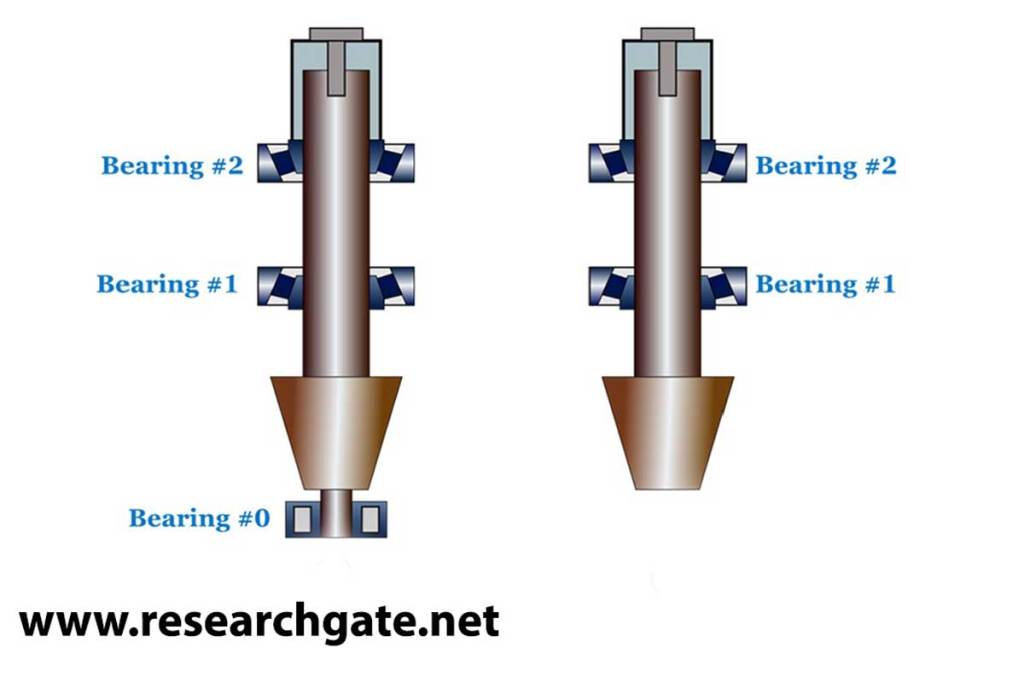
The overhung pinion is the simpler of the two designs. Here, the pinion gear is supported by bearings on only one side of the gear, typically between the driveshaft yoke and the pinion head. The gear “hangs” into the ring gear mesh like a cantilever.
Pros:
- Simple and compact
- Fewer parts, lower cost
- Common in passenger cars and even heavy-duty axles
Cons:
- Weaker under high torque
- The unsupported pinion head can deflect
- Reduced durability at extreme horsepower levels
Example: Mopar’s 8-3/4 and Dana 60 cases are classic overhung designs.
Straddle-Mounted Pinion
The straddle-mounted setup takes a distinct approach. The pinion is captured between bearings on both sides of the gearhead, one in front and one behind. The design preserves the pinion’s rigidity and stability within the housing.
Pros:
- Far stronger under high torque
- Resists pinion deflection
- Provides a more stable gear mesh for longer life
Cons:
- Requires larger, more complex housing
- More expensive to manufacture
Example: The Ford 9-inch, beloved by drag racers, is the epitome of straddle-mounted strength.
The Dana 60 Exception
At first glance, the overhung design would limit the Dana 60. After all, it does not have the pinion head “captured” like a 9-inch. But the Dana 60 has earned its reputation for indestructibility, and here is why:
- Big Ring Gear Diameter: With a massive 9.75-inch ring gear (larger than a 9-inch Ford), the Dana 60 has a greater tooth contact area, reducing the likelihood of tooth shear even under extreme loads.
- Robust Bearings: Oversized pinion bearings, especially the outer unit near the yoke, provide stability and reduce flex.
- Gear Geometry: A subtle hypoid offset increases contact without exaggerating sliding friction.
- Axle Shafts: Dana 60s typically feature 35-spline or larger shafts, distributing torque evenly throughout the entire assembly.
- Housing Rigidity: Thick cast iron housings resist deflection, keeping the gear mesh true under stress.
The Dana 60 may be overhung, but it was built to survive torque levels that would chew lesser axles into scrap.
Why the 9-Inch Still Rules Racing
Even with its smaller 9-inch ring gear, the Ford design holds a special edge: the third pinion support bearing located behind the pinion head. The pinion support keeps the pinion rock-solid during violent launches and clutch dumps, making it the racer’s favorite.
The tradeoff? That extreme hypoid angle that gives the 9-inch such deep tooth engagement also generates more sliding action and more parasitic loss.
Hypoid Offset and Power Loss
Efficiency losses in differentials stem from the hypoid offset, which refers to the distance the pinion sits below the ring gear’s centerline. The deeper the offset, the more the gears slide instead of roll. That sliding creates heat and robs horsepower.
- Ford 9-Inch: With about a 2.25-inch offset, the 9-inch is durable but less efficient. Expect 88–90% efficiency.
- Dana 60: With a shallower 1.125-inch offset, the 60 wastes less energy. Efficiency is usually 92–94%.
The Myth of the “Hungry” Dana 60
So why do racers claim the Dana 60 eats more power? It comes down to perception:
- Rotating Mass: The Dana’s huge ring gear, bearings, and shafts add inertia. That hurts acceleration, even if steady state losses are lower.
- Truck Origins: The Dana 60 was developed for use in heavy-duty trucks. Compared to a lightweight 9-inch, it feels slower, especially in drag racing.
- Cultural Bias: Drag racers embraced the 9-inch early, and its dominance in that arena shaped the narrative.
Dyno tests prove the opposite: the Dana 60 is more efficient, but heavier.
The Bottom Line
- Ford 9-Inch: Straddle-mounted pinion, stronger geometry, king of drag racing, but it pays for it with more parasitic loss.
- Dana 60: Overhung pinion, but massive strength, better efficiency, and unmatched durability in trucks, off-road, and endurance use.
So, the myth flips reality. The 9-inch is more rigid in terms of pinion rigidity, but it “eats” more horsepower. The Dana 60, on the other hand, is more efficient; it just carries more iron along for the ride.
Both designs have their place, and both deserve their legendary status. Which one is right for you? That depends: Are you chasing ET slips at the strip, or building a drivetrain that can take abuse day after day without flinching?
 Mopower Garage
Leave a comment