Published by Christopher J. Holley | Mopar History & Tech | November 2025
When you think of the 1968 Hemi Road Runner, visions of 425 horsepower and tire-smoking launches probably come to mind. What probably does not come to mind is drum brakes on the front wheels. But before you scoff, there is a good reason Chrysler stuck with drums, and a clever engineering story behind them.
Budget Muscle
The Road Runner was designed to deliver maximum thrills for minimal cash. Unlike Charger or GTX buyers, Hemi buyers were looking for one thing: straight-line speed. Adding front-disc brakes would have driven up production costs and, ultimately, the sticker price. Chrysler’s solution: robust drum brakes without power assist, enough to tame the Hemi without breaking the bank.
The Front Servo Drum Magic
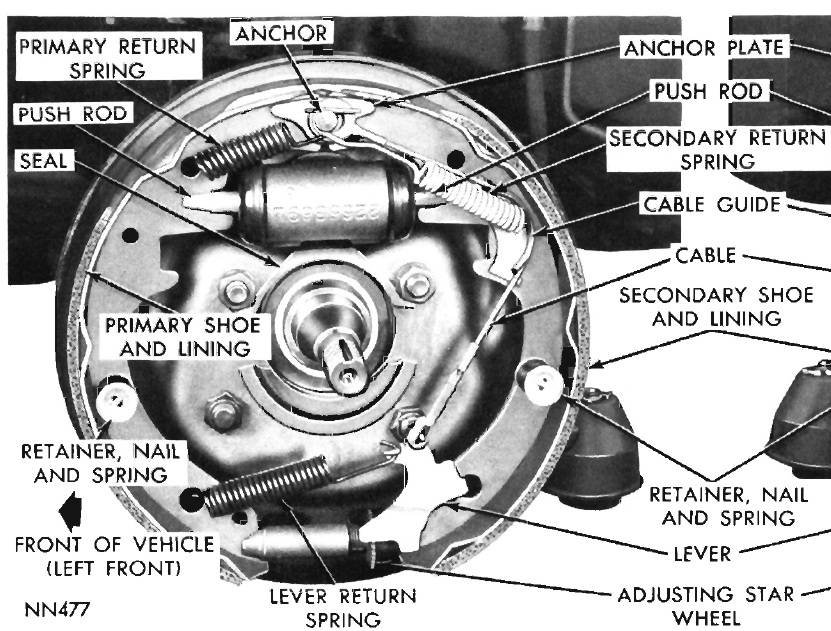
Here is where it gets interesting. The Road Runner’s front drums were not your ordinary setup. They were 11×3-inch, finned, and spring dampened drums with duo-servo action, Chrysler’s way of boosting braking without straining the driver’s leg.
When you pressed the brake pedal, the primary shoe contacted the drum, and through the servo action, it helped pull (or wedge) the secondary shoe into the drum as well. This “mechanical boost” meant more braking force with less effort. Even a heavy Hemi front end could be slowed confidently. The finned drum design also helped manage heat, reducing fade during repeated stops, a big deal for muscle cars that might see a few hard passes down the quarter mile.
Built for the Strip
The Road Runner was not built for winding back roads; it was built for the drag strip. The drum setup handled short, powerful stops perfectly. For street duty and the occasional burnout, they were more than adequate. Enthusiasts who wanted ultimate fade resistance could always upgrade to aftermarket discs, but for most Hemi owners, the stock drums were plenty.
A Clever Compromise
Chrysler’s drum brake design is a testament to practical engineering. It balanced cost, performance, and durability while keeping the Road Runner true to its mission: pure, affordable, and ferocious muscle car performance. Today, the idea of a 425-horsepower car with drum brakes might seem quaint, but back in ’68, it was a smart, well-engineered solution.
 Mopower Garage
Leave a comment