Published by Christopher J. Holley | Mopar History & Tech | November 2025
For decades, leaf‑spring cars have struggled under hard launches. The culprit: axle wrap. When torque hits, the rear axle tends to twist, the springs arc, the pinion climbs, and traction suffers. Enter CalTrac bars, the secret weapon for controlling the chaos.
Axle Wrap? Not on Their Watch
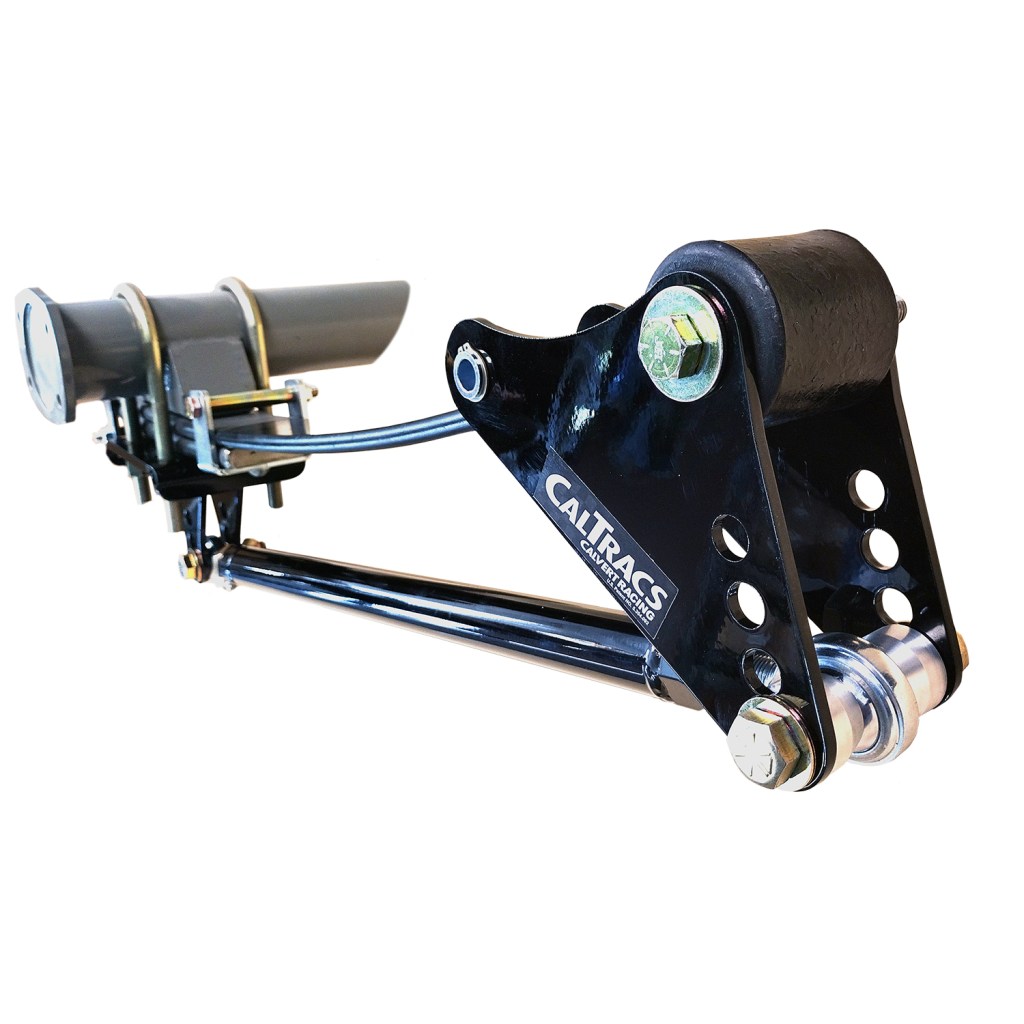
CalTracs link the axle housing to the front spring eye or shackle, resisting axle rotation under load. The result: a stable pinion angle and better traction off the line. As Dragzine puts it, “The CalTracs are designed to keep the axle from rotating, thereby maintaining proper pinion angle. The CalTracs also allow full preload adjustability and are designed to eliminate axle wrap.”
Tunable Launch Performance
Every CalTrac bar is adjustable. Front mounts feature two holes, upper and lower, allowing racers to fine‑tune leverage and bar angle. Preload can be dialed in, giving instant resistance to axle wrap the moment the tires bite. This adjustability makes CalTracs ideal for both street and strip setups.
Respecting the Factory Leaf‑Spring
Unlike a full four‑link or ladder bar setup, CalTracs retain the stock leaf spring as the primary springing medium. The bar acts as a supplemental link, enhancing performance without compromising the suspension’s original character. Calvert Racing has been helping racers tune their leaf‑spring cars since 1991, proving that sometimes, less is more.
Launch Consistency and Traction
By controlling axle wrap and stabilizing pinion angle, CalTracs help tires load predictably. That translates into better traction, smoother launches, and improved 60-foot times when the system is tuned correctly.
The Instant Center Question
Does a CalTrac bar move the suspension’s instant center? Not really, at least not fundamentally.
The instant center (IC) is the point around which the axle pivots vertically. In a conventional leaf‑spring setup, the IC is defined by the front spring eye. According to chassis expert Dave Morgan:
“They do not improve traction because they relocate the Instant Center (IC). The axle still rotates around the front eyelet of the leaf spring, which was and still is the IC of the rear suspension.”
Some argue that minor shifts occur depending on bar mounting height or preload, slightly altering the chassis’ response. But the key takeaway is that CalTracs do not move the geometric pivot; they modify how forces act around it.
Tuning Tips for Maximum Performance
- Mounting Hole: Lower hole = more leverage and front lift. Upper hole = gentler launch.
- Preload: A touch of preload helps the bar engage immediately. Too much makes the car harsh.
- Pinion Angle: Keep it stable; axle rotation control ensures consistent launches.
- Ride Height & Travel: The front suspension must allow for proper lift; otherwise, you fight the system.
- Leaf Spring Health: Maintain springs, shackles, and mounts. Upgraded packs reduce unsprung weight and improve response.
- Complete Chassis Setup: Tires, shocks, weight bias, and front-end geometry all play a crucial role. CalTracs enhance, but do not replace, a well-tuned chassis.
CalTracs are more than just bars; they are a precision tool that transforms leaf‑spring performance, giving racers confidence off the line and helping enthusiasts tame the torque monster lurking under the hood.
 Mopower Garage
Leave a comment