
Published by Christopher J. Holley | Mopar History & Tech | December 2025
Most enthusiasts do not think of the float as one of the carburetor’s circuits, and that is correct. The float does not meter fuel the way the idle, main, or power circuits do. However, the float does control the fuel level that every circuit depends on. In the same way that stable blood pressure keeps a human body alive, a stable fuel level keeps a carburetor happy. Set it too high or too low and every circuit in the carburetor begins to misbehave.
Idle Circuit: Small Signal, Big Sensitivity
The idle circuit is the most sensitive to float height. A high fuel level enriches the mixture and can cause fuel to drip from the boosters. The result is a lumpy idle, a rich exhaust smell, and blackened spark plugs. A low fuel level leans the mixture to the point where the idle mixture screws lose authority, and the engine may stall when returning to idle. If an engine refuses to idle cleanly, the float level is often the true culprit.
Transition Circuit: The First Inch of Throttle
The transition or off-idle circuit bridges the gap between the idle system and the main metering circuit. A high float level causes an overly rich stumble the moment the throttle blades crack open. A low float level creates the classic lean hesitation or flat spot that feels like the engine fell into a hole. Before changing pump cams or discharge nozzles, check the float. Many off-idle issues begin with an improperly set fuel level.
Main Metering Circuit: Where Cruise Lives
Once airs peed increases enough to pull fuel through the boosters, the main metering circuit takes over. Float height heavily influences when those boosters begin to flow. A high float level starts the main circuit early, which enriches cruise and can cause fuel stand-off at the boosters. A low float level delays booster activity, producing a lean surge and inconsistent part-throttle operation. If an engine feels unstable at steady-state speeds, float height is the foundation that must be verified first.
Power Enrichment: The Safety Net Under Load
Under heavy load, the power circuit provides the extra fuel needed to prevent detonation. A raised fuel level causes enrichment to begin early, which leads to overly rich wide-open-throttle operation. A lowered fuel level delays enrichment, risking lean conditions and spark knock. The float does not directly control the power system, but it alters when the power valve or metering rods react.
Accelerator Pump Circuit: Instant Fuel on Demand
The accelerator pump circuit relies on fuel volume stored beneath the pump diaphragm. A high float can cause fuel to dribble from the discharge nozzle at idle, creating tip-in richness. A low float reduces the fuel available in the pump cavity, which weakens the pump shot and can produce a stumble during quick throttle movements. A strong, clean pump shot requires a consistent fuel height in the bowl.
Choke and Cold-Start: The Morning Behavior
Cold engines demand richer mixtures, and the choke system provides it. A high float level exaggerates the choke’s enrichment, leading to a heavily rich start, lazy throttle response, and black smoke. A low float level does the opposite and makes cold starts difficult. The engine may start but fail to stay running until it warms. The choke circuit depends entirely on the baseline fuel level established by the float.
Recognizing Float Problems
High Float Symptoms:
– Rich smell
– Fuel dripping from boosters
– Black spark plugs
– Stumble right off idle
– Hard hot restarts
Low Float Symptoms:
– Lean surge at cruise
– Hesitation on acceleration
– Weak pump shot
– Late booster activity
– Engine falls flat at wide-open throttle
Setting Float Height Correctly
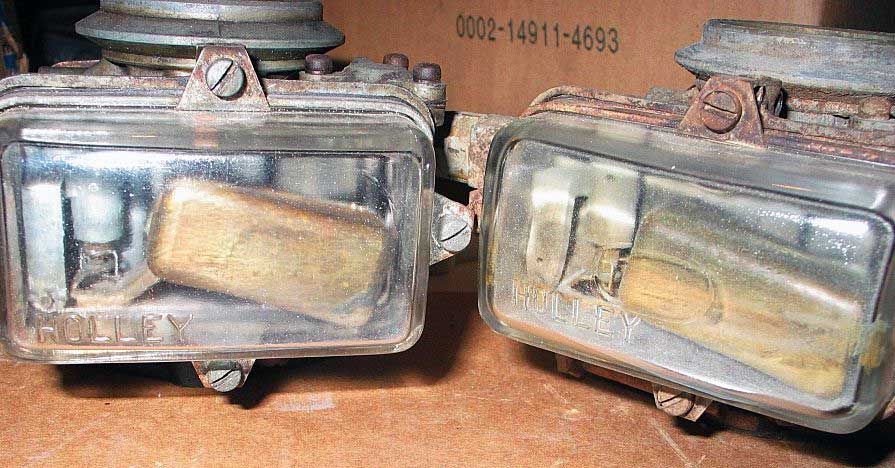
Different carburetors require different methods. Holley carburetors use sight plugs and adjusters, with the correct level sitting at the bottom of the sight hole at idle. Carter and Edelbrock designs require precise measurements of float height and drop using a scale and the gasket surface. Regardless of the brand, proper float level is the foundation of proper metering.
 Mopower Garage
Leave a comment