Published by Christopher J. Holley | Mopar History & Tech | December 2025
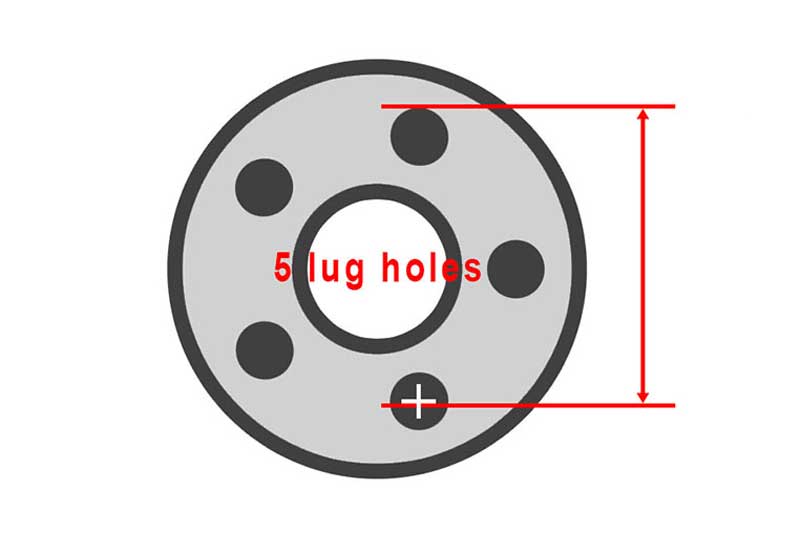
Chrysler did not use two different 5-lug bolt patterns by accident. The 5 on 4.0 in. and 5 on 4.5 in. patterns were a deliberate engineering and cost decision tied to vehicle weight, brake size, and hub durability, and they mirrored what other manufacturers were doing at the time.
The Two Chrysler 5-Lug Patterns
5 on 4.0 inches (5×4″) — “Small Bolt Pattern”
Used on:
- A-body cars (Valiant, Dart, Duster, early Barracuda)
- Lighter Slant-Six and Small-block V8 applications
- Mostly drum-brake cars
Why did it exist?
- Lower vehicle weight
- Smaller wheel bearings
- Smaller brake drums
- Less torque loading on the hub
Engineering logic:
Chrysler designed the A-body to be light, economical, and compact. The 5×4″ pattern was perfectly adequate for:
- ~3,000 lb. vehicles
- Narrower tires
- Modest brake diameters
- Everyday street use
Using a smaller bolt circle:
- Reduced unsprung mass
- Lowered manufacturing cost
- Allowed more compact hub and spindle designs
It was not a “cheap” design—just properly scaled.
5 on 4.5 inches (5×4.5″) — “Large Bolt Pattern”
Used on:
- B-body (Charger, Road Runner, Coronet)
- E-body (Challenger, ’70-up Barracuda)
- C-body (Newport, New Yorker)
- Police, taxi, towing packages
- High-performance and heavy-duty applications
Why Chrysler used it:
- Heavier vehicles
- Larger brake drums and rotors
- Higher torque loads
- Wider tires
Engineering advantages:
- Greater stud spacing reduces shear load per stud
- Allows thicker hubs
- Better heat management with larger brakes
- Improved durability under high lateral and braking loads
This is why every big-block performance car got the 5×4.5″ pattern—even when the engine was optional.
Why Chrysler Did Not Standardize One Pattern
From a modern standpoint, two bolt patterns seem unnecessary. In the 1950s–70s, however:
- Wheels were steel, not aluminum
- Tires were narrow bias-ply
- Manufacturing cost mattered greatly
- “One-size-fits-all” added unnecessary weight
Chrysler engineering philosophy was right sizing, not overbuilding.
Ford and GM did the same thing:
- GM: 5×4.75″ vs 5×5″
- Ford: 5×4.5″ vs 5×5.5″
Why the 5×4″ Pattern Disappeared
By 1976, several things forced Chrysler’s hand:
- Federal front disc brake requirements
- Larger wheel bearings
- Heavier cars
- Radial tires with higher grip
- Parts standardization pressures
The small bolt pattern simply could not:
- Package larger disc brake rotors efficiently
- Support increasing curb weights
- Meet durability standards long-term
As a result:
- Late A-bodies moved to 5×4.5″
- Small bolt pattern was permanently phased out
Summary Table
| Feature | 5×4″ | 5×4.5″ |
| Vehicle weight | Light | Medium–Heavy |
| Brake size | Small drums | Large drums / discs |
| Performance use | Limited | Yes |
| Torque capacity | Lower | Higher |
| Longevity | Obsolete by 1976 | Still used today |
Bottom Line
Chrysler used two bolt patterns because it was good engineering, not oversight.
- 5×4″ was ideal for light A-bodies
- 5×4.5″ was required for power, weight, and performance
Once cars got heavier, faster, and safer, the smaller pattern had no remaining advantage—and Chrysler retired it.
 Mopower Garage
Leave a comment