
Published by Christopher J. Holley | Mopar History & Tech | January 2026
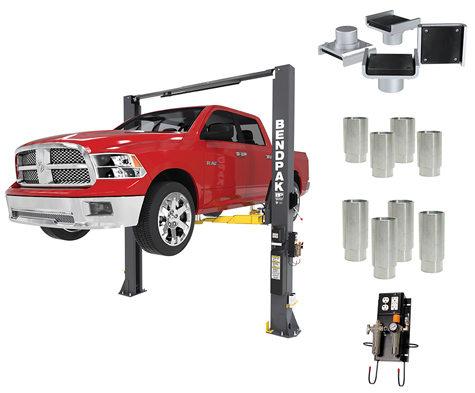
Walk into almost any professional repair facility, speed shop, or well-equipped home garage and you will find the same piece of equipment at the center of daily operations: the two-post car lift. For decades, it has remained the preferred solution for technicians who need full vehicle access, efficient workflow, and maximum use of floor space. When used correctly, a two-post lift is not only versatile, but also indispensable.
Unmatched Access Where It Matters
The biggest advantage of a two-post lift is simple: access. With the vehicle suspended by its frame or designated lifting points, technicians have clear, unobstructed reach to the suspension, drivetrain, exhaust, brakes, and underbody. Oil changes, transmission removal, exhaust fabrication, and suspension work can all be performed without fighting platforms or crossmembers.
Unlike drive-on or four-post lifts, there is nothing in the way, just the vehicle and the work at hand.
Efficiency in a Compact Footprint
Space is money in any shop, and two-post lifts make excellent use of both. Their relatively small footprint allows more vehicles to be serviced in less square footage, making them ideal for high-volume operations and home garages alike. With no runways occupying floor space, technicians can move freely around the vehicle, improving both productivity and safety.
Strength and Versatility
Modern two-post lifts are engineered to manage a wide range of vehicles, with capacities commonly ranging from 7,000 to over 15,000 pounds. That means everything from compact cars to full-size trucks and SUVs can be lifted safely, provided the lift is properly rated and used as intended. This versatility makes the two-post lift a practical investment for shops that service diverse vehicle types.
Better Ergonomics, Better Work
By raising the vehicle to a comfortable working height, two-post lifts reduce strain on technicians’ backs, knees, and shoulders. Jobs that would otherwise require crawling on the floor or working overhead become faster, cleaner, and physically easier. Over time, that ergonomic advantage translates to fewer injuries and longer careers.
Cost-Effective Performance
Compared to four-post or specialty lifts, two-post systems often deliver more functionality per dollar. For startups, independent shops, and serious enthusiasts, they offer professional capability without the higher price tag, making them one of the best returns on investment in shop equipment.
Safety: The Non-Negotiable Side of the Lift
As capable as a two-post lift is, it demands respect. Nearly every lift-related accident can be traced back to improper use, skipped inspections, or ignored procedures.
Training Comes First
Every operator should understand proper arm placement, vehicle weight limits, and safety lock operation. Guesswork has no place under a suspended vehicle.
Lift the Vehicle, Not the Body Panels
Correct lifting points are critical. Placing arms incorrectly can damage the chassis, or worse, allow the vehicle to shift or fall. Manufacturer guidelines and vehicle service information should always be followed.
Inspect Before Use
A quick visual inspection of cables, chains, arm restraints, hydraulic components, and safety locks should be routine. Worn or damaged parts must be addressed immediately, not “after this one job.”
Lock It Before You Work
Hydraulics lift the vehicle, but mechanical locks keep it there. Once the vehicle is at working height, always lower it onto the safety locks before stepping underneath.
Controlled Movement Only
Smooth, deliberate lifting and lowering reduces stress on the equipment and prevents vehicle movement. The area around the lift should always remain clear of tools and bystanders.
Maintenance Is Part of Safety
Regular lubrication, fluid checks, and scheduled inspections are not optional, they are essential. A well-maintained lift is a safe lift.
The Bottom Line
The two-post lift has earned its reputation through decades of real-world use. It delivers unmatched access, efficient use of space, and professional-grade capability at a reasonable cost. When paired with proper training, regular inspection, and disciplined safety practices, it remains one of the most powerful tools a technician can have.
 Mopower Garage
Leave a comment