Published by Christopher J. Holley | Mopar History & Tech | January 2026
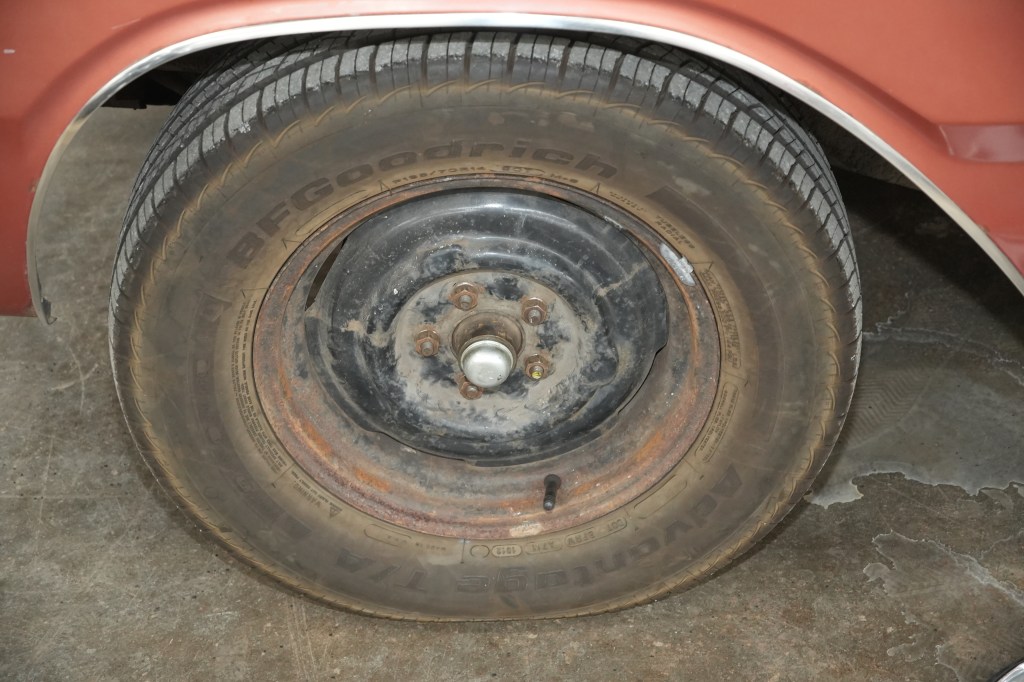
During the golden age of American muscle, Chrysler stood apart in many ways. Its engines were larger, its platforms more diverse, and its engineering philosophy was often more conservative than its competitors. One detail that continues to puzzle enthusiasts today is Chrysler’s use of two different five-lug wheel bolt patterns during the 1960s and early 1970s: 5×4.00 inches and 5×4.50 inches. At first glance, this appears inefficient. Why would one manufacturer complicate production when a single bolt pattern might have sufficed?
Two Bolt Patterns, Two Missions
Chrysler did not choose bolt patterns arbitrarily. Each was tied directly to vehicle size, weight, and intended use.
The 5×4.00-inch bolt pattern, commonly called the small bolt pattern, was used primarily on A-body vehicles. These included the Plymouth Valiant, Dodge Dart, and early Barracuda. These cars were lighter, narrower, and engineered with compact suspension components. Smaller wheel bearings, brake assemblies, and axle flanges were sufficient for their loads and power levels.
The 5×4.50-inch bolt pattern, known as the large bolt pattern, appeared on B-body, E-body, and C-body cars. Chargers, Road Runners, Challengers, ’Cudas, Furys, and Imperials all used it. These vehicles were heavier, produced more torque, and required stronger hubs, larger bearings, and more robust brake packages. The larger bolt circle distributed loads more effectively and improved durability under high-performance use.
Engineering First, Wheels Second
From a modern perspective, it may seem logical to standardize all vehicles around the larger, stronger 5×4.50-inch pattern. In reality, doing so during the muscle car era would have required far more than changing wheels.
Bolt pattern is dictated by hub and spindle dimensions, not the other way around. A-body cars were designed around smaller spindles and bearings to reduce weight, cost, and rolling resistance. Converting them to the larger bolt pattern would have required redesigned suspension geometry, larger brakes, new axles, and different hubs throughout the system. That level of change would have amounted to a complete front and rear suspension redesign.
For Chrysler, maintaining two established systems was far more economical than reengineering an entire platform.
Cost effectiveness must be evaluated in historical context. By the mid-1960s, Chrysler had already invested heavily in tooling for both A-body and B-body architectures. Suppliers were established, manufacturing lines were tuned, and component costs were predictable.
Standardizing on a single bolt pattern would not have reduced expenses in the short term. Instead, it would have required new tooling, validation testing, and supplier renegotiations, all with little tangible benefit to the customer or the corporation. In an era when profit margins were measured in dollars per car, not long-term platform consolidation, such a move made little sense.
Platform Segmentation Was Intentional
Chrysler also used hardware differences to reinforce product hierarchy. A-body cars were positioned as economical compacts that could be quick and agile. B- and E-body cars were marketed as serious performance machines. Using lighter-duty components on smaller cars helped control costs and weight, while reserving heavier-duty hardware for premium models.
Adding unnecessary mass to A-body cars would have hurt fuel economy, handling, and price competitiveness. Even before the fuel crises of the 1970s, efficiency and affordability mattered, especially in entry-level segments.
Industry Practice, Not an Outlier
Chrysler was not alone in this approach. General Motors used multiple bolt patterns across its divisions, including 5×4.75 inches and 5×5 inches. Ford standardized earlier on the 5×4.50-inch pattern, but Ford also relied more heavily on shared platforms across vehicle classes.
In this context, Chrysler’s decision reflected a broader industry trend rather than an engineering misstep.
Why Chrysler Eventually Standardized
By the mid-1970s, circumstances changed. Performance differentiation declined, vehicle weights increased due to safety and emissions requirements, and corporate cost-cutting became paramount. Chrysler gradually phased out the 5×4.00-inch pattern and standardized around 5×4.50 inches.
At that point, consolidation made sense. Platforms were fewer, performance expectations were lower, and the benefits of standardization finally outweighed the costs.
The Final Verdict
Would one bolt pattern have been simpler? In hindsight, yes. Would it have been cheaper during the muscle car era? No.
Chrysler’s dual bolt-pattern strategy was a rational response to the engineering, manufacturing, and market realities of the time. What frustrates modern restorers and wheel buyers today was, in its era, a practical and cost-effective solution that aligned perfectly with Chrysler’s platform-driven design philosophy.
 Mopower Garage
Leave a comment