Published by Christopher J. Holley | Mopar History & Tech | January 2026
Here are the typical crankshaft centerline-to-camshaft centerline dimensions used in classic American small-block V8 engines (pushrod OHV designs) from the three major manufacturers:
Chevrolet Small-Block V8 (Gen I)
- Approximately ≈ 4.521 inches between crank CL and cam CL.
- This is the distance in classic 262–400 SBC blocks for the camshaft positioned low in the block, driven by timing chain/gears.
Ford Small-Block V8 (Windsor family, e.g., 289/302/351W)
- Approximately ≈ 4.80 inches from crank CL to cam CL.
- This is the common dimension cited in timing chain/timing set catalogs and Ford enthusiast references.
Mopar Small-Block V8 (LA / Magnum family)
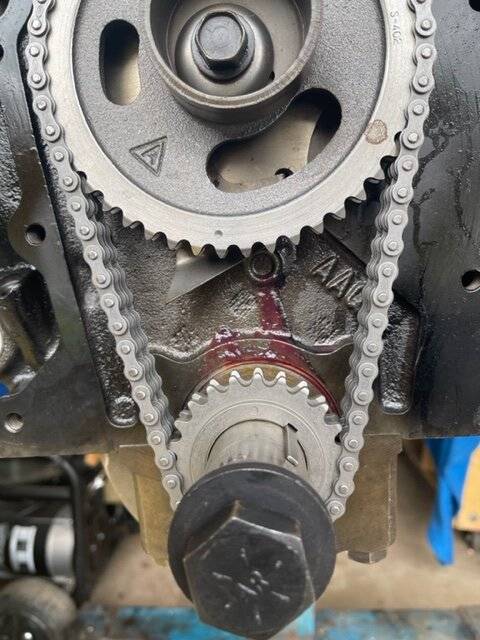
- Approximately ≈ 6.125 inches from crank CL to cam CL.
- Mopar “LA” small blocks (273/318/340/360) and later Magnum engines have a raised-cam location compared to Chevy/Ford, giving the camshaft a higher centerline in the block.
Notes & Context
- These measurements refer to installed camshaft centerline height relative to the crankshaft centerline — essentially how high the cam sits in the block. They are useful for timing set length, cam height clearance, and engine swaps.
- Mopar’s significantly higher cam position is why small-block Chrysler engines commonly use longer timing chains and have shorter pushrods relative to stroke compared with Chevy/Ford engines.
- Variations can occur with aftermarket blocks/raised-cam or modified front-drive systems; always verify with the specific block casting or machinist drawings for precise work.
Yes — the higher camshaft location in a Mopar small-block does make it easier to package a stroker crank, and that was one of Chrysler’s quiet long-term advantages in block architecture.
Here’s why, in practical engine-builder terms.
1. The Real Interference in a Stroker Is not the Block — It is the Cam
When you add stroke, the big end of the connecting rod swings closer to the camshaft tunnel at bottom dead center.
- In low-cam engines (Chevy SBC, Ford Windsor), the rod bolts are the first thing to hit the cam.
- That is why Chevy strokers often require:
- Reduced base-circle cams
- Small-journal cams
- Narrow rod bolts
- Extensive rod-to-cam grinding
2. Mopar’s Raised Cam = Built-In Rod Clearance
The Mopar LA/Magnum cam sits ~1.3–1.6 inches higher than a Chevy SBC.
What that buys you:
- More vertical separation between:
- Crank throws
- Rod big ends
- Camshaft lobes
- Less rod-to-cam interference at longer strokes
Real-world effect:
- Mopar small-blocks routinely accept:
- 4.00″ stroke with minimal cam clearance work
- 4.125″ stroke with smart rod selection
- Chevy SBCs start fighting cam clearance hard above ~3.75–3.875″ stroke without compromises.
3. Why Mopars Rarely Need Reduced Base-Circle Cams
Because the cam is higher:
- You can often run a standard base-circle cam
- You get:
- Better lobe rigidity
- More aggressive profiles
- Less valvetrain deflection
This is a big deal for durability in a street/strip engine.
4. Secondary Benefits for a Stroker Mopar
Shorter pushrods (relative to deck height)
- Improved valvetrain stability
- Less flex at high RPM
Better rod angularity options
- Especially when paired with longer rods
- Helps piston dwell and cylinder fill
More room for counterweights
- Less grinding at the pan rails and cam tunnel
5. Tradeoffs (Because Nothing’s Free)
The raised cam does come with costs:
- Longer timing chain
- Slightly more chain stretch
- Why gear drives were popular in Mopars
- Taller lifter angles
- More side-loading on lifter bores
- Packaging
- Wider block
- Intake manifold geometry is different than SBC/Ford
But none of these offset the stroker advantage.
6. Bottom Line (Builder’s Answer)
Yes — the Mopar’s higher camshaft location absolutely makes it easier to fit a stroker crank.
It:
- Reduces rod-to-cam interference
- Preserves camshaft lobe size
- Simplifies clearancing
- Improves durability at long stroke
This is one of the reasons 408, 416, 422, and even 434 cubic-inch Mopar small-blocks became so common without extreme compromises — while Chevy had to engineer around the cam being in the way.
 Mopower Garage
Leave a comment