Published by Christopher J. Holley | Mopar History & Tech | January 2026
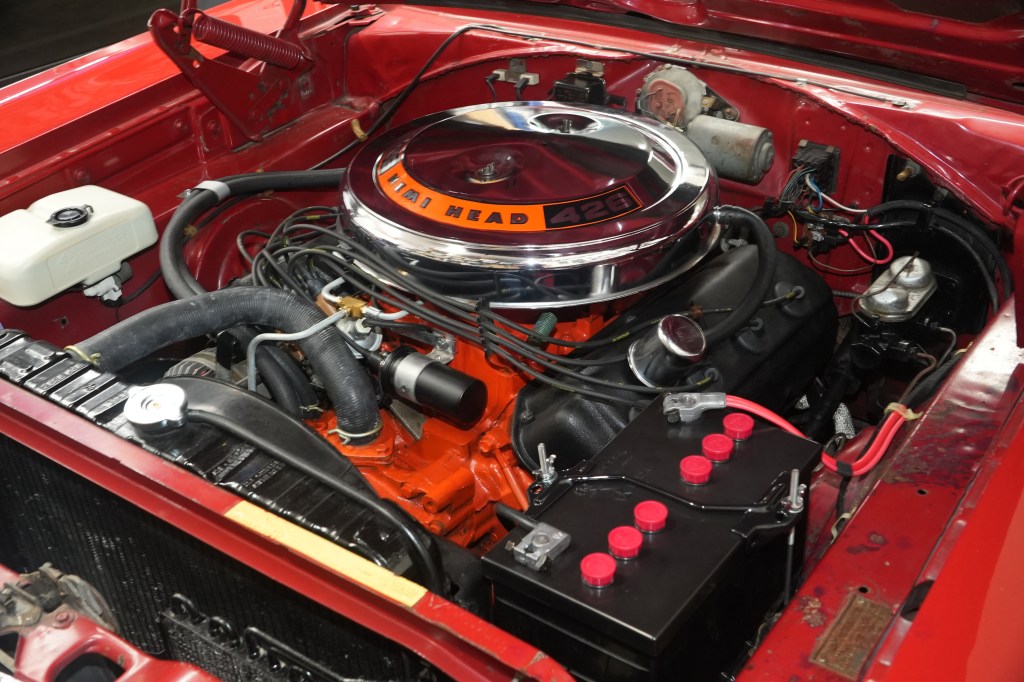
When we purchased our 1968 Hemi Road Runner, we used the vintage oil pressure gauge that had been installed in the late-1970s. Based on the observed and expected oil pressure numbers, approximately 25–30 psi at hot idle (800 rpm), 55–60 psi at cruising speed, and 65–70 psi under load using 10W-30 oil, these readings provide valuable insight into the bearing clearances of a street-driven 426 Hemi.
Bearing Clearance Implications
These oil pressure readings strongly indicate factory-tight to mild performance bearing clearances, rather than the looser clearances associated with race-only engines.
Likely bearing clearance ranges fall into the following window. Main bearings typically measure 0.0018–0.0023 inch, while rod bearings generally fall between 0.0016–0.0021 inch. This represents an ideal operating range for a street-driven Hemi running 10W-30 oil.
Oil pressure is fundamentally a measure of resistance to flow. When an engine maintains stable pressure with normal oil pump volume, a stock relief spring, 10W-30 oil, and hot idle pressure consistently above 25 psi, the behavior points to moderately tight, properly controlled hydrodynamic bearing clearances.
At hot idle, pressure in the 25–30 psi range indicates that oil is not escaping excessively from the bearing journals at low pump speed. Engines with looser clearances, particularly those with main bearing clearances exceeding approximately 0.0028 inch, often struggle to maintain even 15–20 psi once fully warmed.
At cruising speed, oil pressure in the 55–60 psi range reflects good bearing control without excessive load on the oil pump. Engines built with overly tight clearances tend to show sustained pressures closer to 65–70 psi during normal driving.
At higher engine speeds, peak oil pressure in the 65–70 psi range indicates that the pressure relief valve is functioning as intended. Loose, race-oriented engines often never reach relief pressure, even at elevated rpm.
For context, a factory-specification Street Hemi when new in 1968 typically used main bearing clearances of 0.0015–0.0020 inch and rod bearing clearances of 0.0013–0.0018 inch, often producing 30–35 psi at hot idle when running straight 30-weight oil. By contrast, loose race-focused Hemis commonly run main bearing clearances of 0.0028–0.0035 inch and rod bearing clearances of 0.0025–0.0030 inch, require heavier oils such as 20W-50, and frequently show hot idle pressure in the 10–15 psi range. Engines built too tightly, with main clearances below 0.0015 inch and rod clearances below 0.0014 inch, tend to exhibit excessive cold-start pressure, slower oil return, and an increased risk of bearing scuffing.
The oil pressure behavior observed here does not align with either extreme, which is a positive indication.
Oil choice further reinforces this conclusion. 10W-30 oil performs correctly in this application only when bearing clearances are properly set, the oil pump and relief valve are healthy, and internal leakage is well controlled. If the engine required heavier oil to compensate for excessive clearance, hot idle pressure would already be marginal.
A simple diagnostic can be performed without disassembly. With the engine fully warmed and idling at a prolonged stop, briefly raise engine speed to approximately 1,500 rpm. A rapid rise in oil pressure to roughly 40 psi or higher suggests tight, healthy bearing clearances. A slow or minimal increase in pressure indicates clearances trending toward the loose side.
Taken together, this oil pressure behavior points to an engine that was properly assembled, not excessively clearanced, and optimized for real-world street use rather than peak dyno numbers. In short, it is operating exactly as a Street Hemi should.
 Mopower Garage
Leave a comment