Published by Christopher J. Holley | Mopar History & Tech | February 2026
Chrysler’s move to electronic ignition marked one of the most important mechanical transitions of the muscle car and early emissions era, quietly reshaping reliability and maintenance across the industry.
Chrysler first introduced its electronic ignition system for the 1971 model year. The initial rollout was limited and strategic, appearing on selected high-performance engines such as the 340 cubic inch V8 and the 426 Hemi. At the time, breaker points were still the industry norm, but Chrysler engineers recognized their limitations at higher engine speeds and under increasing emissions requirements. The new electronic system eliminated points entirely, replacing them with a magnetic pickup in the distributor and a solid-state control unit, resulting in more consistent spark timing and reduced maintenance.
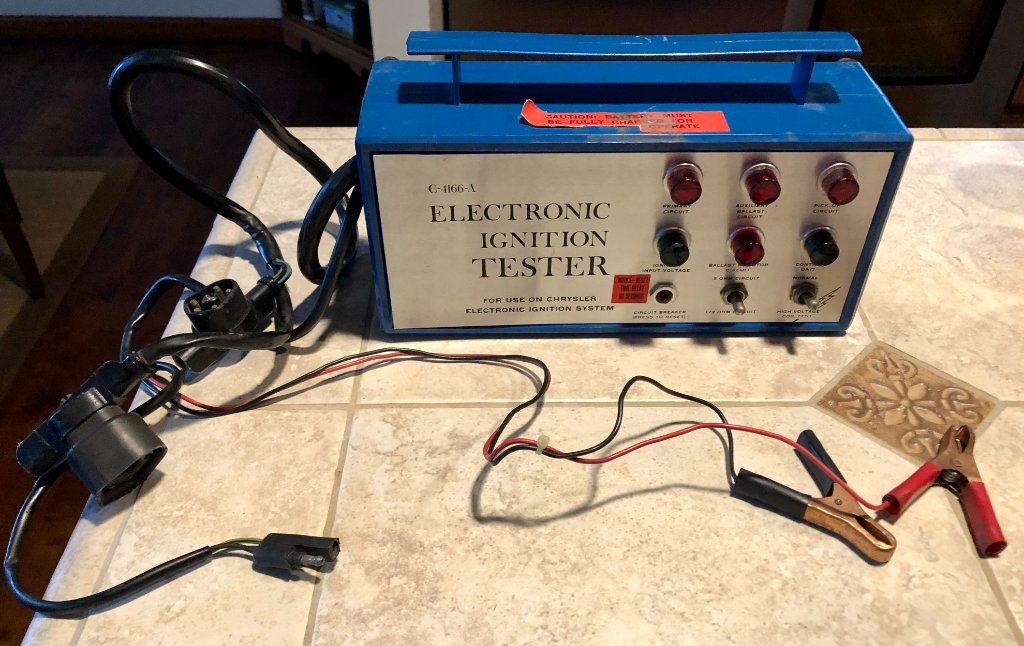
During the 1972 model year, Chrysler expanded electronic ignition availability across a broader range of engines and models. While not yet universal, the system quickly proved its value in durability and performance, especially as tighter emissions standards demanded more precise ignition control. Dealers and technicians were trained to support the new technology, and specialized tools such as the C-4166 ignition tester were introduced to support diagnosis and service.
By the 1973 model year, Chrysler completed the transition. Electronic ignition became standard equipment across all Chrysler, Dodge, and Plymouth passenger cars and light trucks. This made Chrysler the first of the major American manufacturers to fully adopt electronic ignition throughout its entire lineup, several years ahead of Ford and General Motors.
The decision proved influential. Chrysler’s early commitment to electronic ignition set a precedent that the rest of the industry soon followed, and the basic architecture of that 1970s Mopar ignition system remains familiar to enthusiasts and restorers today. What began as a performance upgrade became a defining step toward modern engine management, bridging the gap between mechanical systems and the computerized controls that would soon follow.
 Mopower Garage
Leave a comment