Published by Christopher J. Holley | Mopar History & Tech |February 2026
Every year, thousands of Cub Scouts, parents, and hobbyists line up to race their gravity-powered creations down the iconic Pinewood Derby track. While craftsmanship counts, speed is king, and the secret lies in physics, precision, and careful preparation. Here is how to build a championship contender.
1. The Foundation: Start with the Block
- Block: Standard pine block from the official kit.
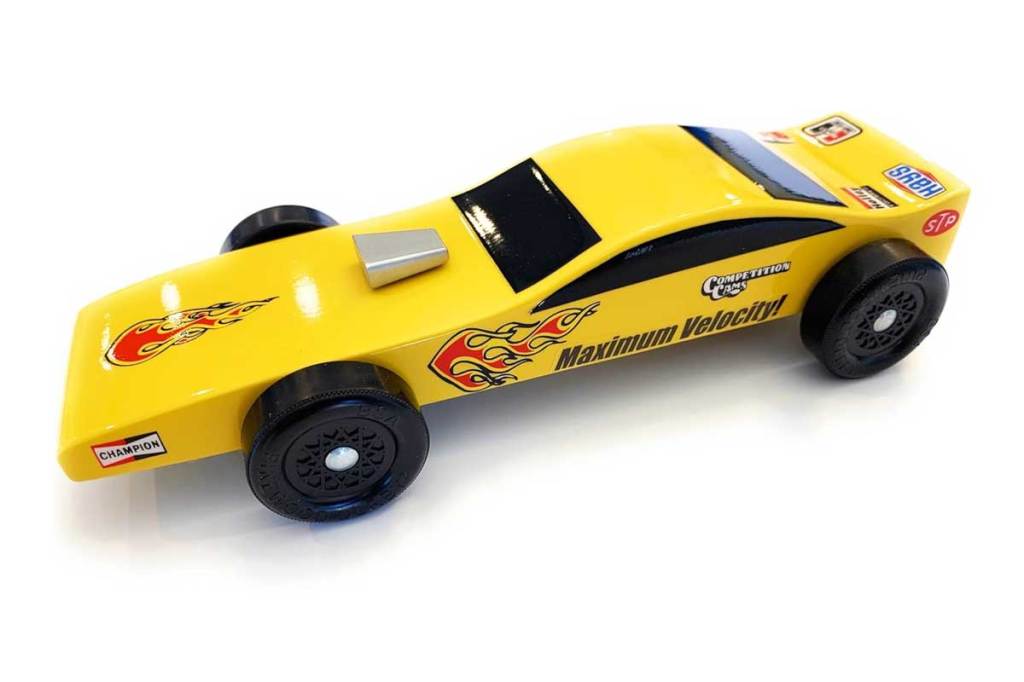
- Shape: Keep it sleek, narrow, and low-profile. While aerodynamics matters less at these speeds, a wedge or streamlined shape minimizes wobble and looks sharp.
- Cutting Tip: Use a coping saw or bandsaw. Sand edges smooth, rough edges catch the track and slow your car.
2. Weight Is Your Friend
- Maximum Weight: 5.0 ounces (or your race limit).
- Placement: Install weights about one inch in front of and over the rear axle. This rear-biased weight placement increases gravitational potential energy while keeping the car stable.
- Weight Types: Tungsten or steel cylinders are ideal because they are dense and compact. Fill cavities carved into the bottom of the car.
Pro Tip: Weigh your car as you go. Even a few hundredths of an ounce can matter.
3. Axles & Wheels: The Hidden Champions
- Polish Axles: Smooth metal axles with fine sandpaper or a jewelers’ polish.
- Wheel Prep: Sand lightly, remove flash, and ensure they spin freely. Graphite powder lubrication is standard, apply lightly for max RPM.
- Alignment: Aim for a slightly rail-riding setup. One wheel lightly touches the guide rail to reduce wobble and track drag.
4. Aerodynamics & Appearance
- Shape: A wedge or tapered nose reduces drag.
- Finish: Sand smooth. Apply a glossy finish or paint coat.
- Style Bonus: Add decals or racing stripes for personality, just do not overdo the weight.
5. Assembly & Final Checks
- Axle Installation: Insert axles carefully; ensure wheels spin straight without binding.
- Weight Balance: Test on a small incline to see if it rolls straight. Adjust weight placement if the car veers.
- Final Polish: Apply a thin layer of graphite to wheels just before race day. Avoid over-lubing, too much powder attracts dust and slows the car.
6. Test & Tune
- Dry Runs: Use a practice track if possible. Watch for wobble, uneven acceleration, or wheels rubbing.
- Adjustments: Tiny tweaks, axle angle, wheel spacing, or weight, can shave fractions of a second, which is often the difference between 1st and 2nd place.
Winning Mindset
- Speed is important, but patience and precision win championships.
- Every fraction of an ounce, degree of angle, and grain of graphite matters.
- Build with care, test relentlessly, and embrace the science behind the fun.
Conclusion
With careful design, strategic weight placement, frictionless wheels, and precise alignment, your Pinewood Derby car can go from a simple wooden block to a track-dominating machine. Remember, championships are won in the details, and a little physics magic goes a long way.
 Mopower Garage
Leave a comment