Published by Christopher J. Holley | History & Tech |February 2026
The radiator is the unsung hero of engine performance. Its role in maintaining optimal engine temperature is critical, yet not all radiators operate in the same way. Two common designs, downflow and crossflow, handle coolant differently. Understanding the distinction can improve performance and reliability.
Flow Direction: Vertical or Horizontal
The primary difference between downflow and crossflow radiators lies in how coolant travels through the core.
Downflow radiators move coolant from the top of the radiator to the bottom. Gravity assists the flow, making this design ideal for older vehicles where engine compartments have greater vertical space than width.
Crossflow radiators move coolant horizontally from one side of the radiator to the other. This design suits modern vehicles with limited vertical clearance. Coolant passes through shorter tubes more quickly, improving heat transfer and reducing the risk of hot spots.
Core Design and Cooling Efficiency
Downflow radiator cores are generally taller than they are wide, with tanks mounted at the top and bottom. This arrangement provides adequate cooling for classic engines, but efficiency can be limited in high-performance applications. Hot coolant can collect at the bottom of the core, creating uneven cooling.
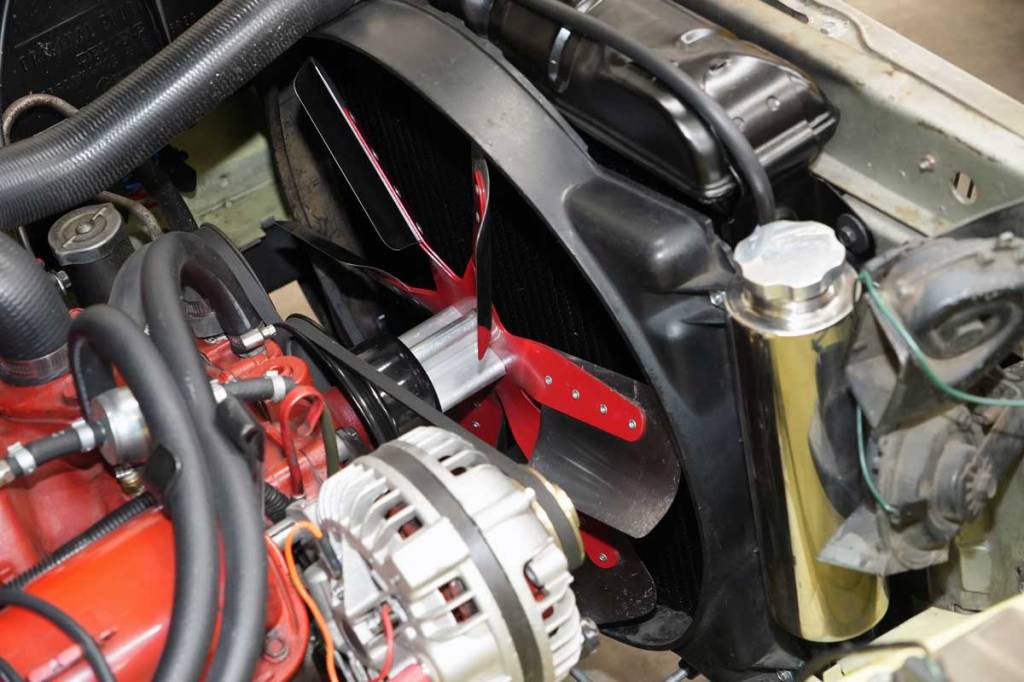
Crossflow radiators are wider than they are tall, with side-mounted tanks. This layout maximizes surface area and encourages even coolant flow. When paired with properly mounted fans, crossflow radiators maintain consistent temperatures in high-output engines.
Applications: Past and Present
Downflow radiators are often used in classic cars, trucks, and restorations where simplicity and packaging are important. Crossflow radiators dominate modern vehicles, high-performance machines, and cars with transverse-mounted engines, where efficient heat dissipation is essential.
Advantages and Limitations
| Feature | Downflow | Crossflow |
| Cooling efficiency | Moderate | High |
| Risk of hot spots | Greater at bottom | Lower |
| Core size flexibility | Limited width | Wider and more versatile |
| Manufacturing cost | Generally lower | Slightly higher |
Conclusion
The choice between downflow and crossflow radiators depends on vehicle design, engine output, and cooling requirements. Downflow radiators provide reliable, cost-effective cooling for classic and low-power engines. Crossflow radiators deliver superior efficiency and even cooling for modern and performance engines. Selecting the appropriate radiator ensures that the engine remains cool and performs optimally in any driving scenario.
 Mopower Garage
Leave a comment