Published by Christopher J. Holley | History & Tech |March 2026
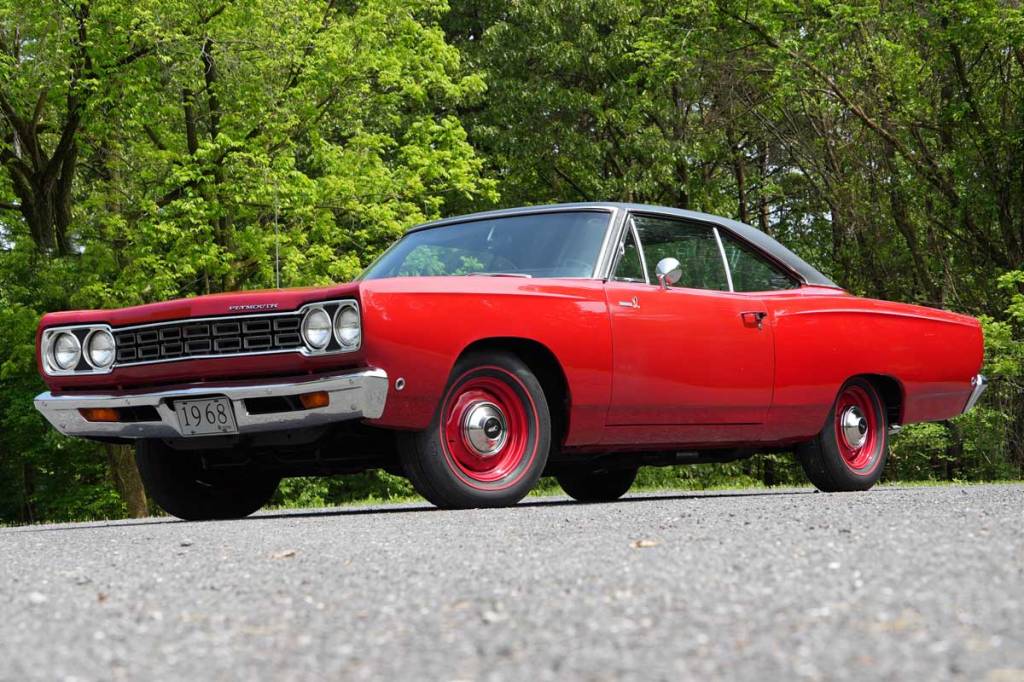
The 1968 Plymouth Road Runner paired with the legendary 426 Hemi represents one of the most iconic moments in muscle-car history. That year marked a peak in Chrysler’s performance image, and the Road Runner was designed to be fun, fast, and accessible, without the extra chrome and frills of models such as the Satellite or GTX. The addition of the Hemi engine created a level of excitement that remains unmatched to this day.
The Hemi Engine Mythos
The 426 Hemi had already achieved near-mythical status before it reached production cars. Originally developed for automobile racing (NASCAR and drag racing), its hemispherical combustion chamber delivered exceptional airflow and horsepower. With 425 horsepower from the factory, the Hemi provided astonishing performance for a mid-size car. A stock-looking Road Runner equipped with the Hemi could outperform vehicles that cost twice as much. It was not just fast; it was a statement on wheels.
Minimalist Muscle
The 1968 Road Runner embodied the philosophy of simplicity and performance. Chrysler designed the car to be lightweight and no-nonsense. Even the playful “Beep Beep” Warner Brothers Road Runner sound trademark on the hood added character without detracting from its performance focus. The combination of lightweight design and Hemi power created a car that was both mischievous and untouchable.
Drag Strip Icon
The Hemi Road Runner quickly became a fixture on the drag strip. Enthusiasts lined up at local tracks, sharing stories of performance and rare sightings. The Hemi option, due to its rarity and cost, became almost legendary. On the street, spotting a Hemi Road Runner instantly commanded respect.
Marketing and Cultural Impact
Plymouth’s marketing strategy emphasized fun and performance over luxury and options. The Road Runner sold itself through simplicity, affordability, and brutal power. The combination of cartoonish branding and real-world performance generated excitement among young enthusiasts, cementing the car’s place in pop culture.
Collector Craze
Even in 1968, Hemi Road Runners attracted attention. Today, they remain the Holy Grail for Mopar collectors (actually, the 426 Hemi convertible ‘Cuda may be the Holy Grail). Enthusiasts pursue them for the engine, drag-strip heritage, and the pure essence of 1960s muscle-car culture. Owning a Hemi Road Runner is akin to owning a piece of automotive folklore.
The 1968 Road Runner Hemi was more than a car; it was a bold statement: minimal fuss, maximum thrill. It proved that a vehicle did not require extravagant options to dominate both the street and the strip.
 Mopower Garage
Leave a comment