Published by Christopher J. Holley | History & Tech |April 2026
The Plymouth Road Runner was never meant to survive in a world like 1973.
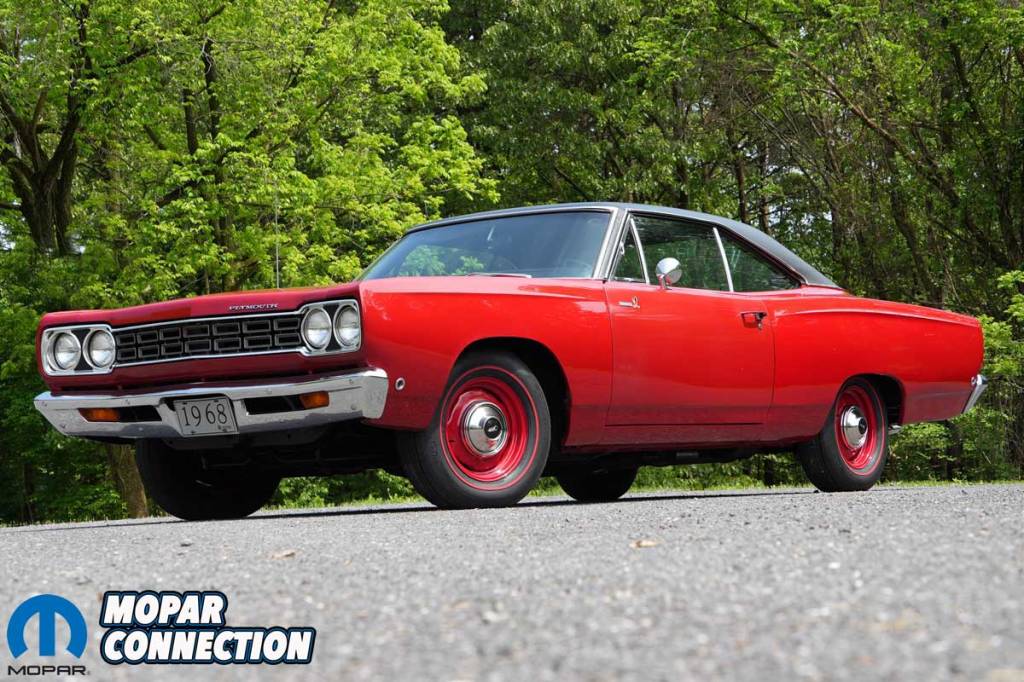
It was born in a different America, one where fuel was cheap, horsepower was king, and the idea of restraint felt almost unpatriotic. When Chrysler Corporation unleashed the Road Runner in 1968, it was a blunt instrument with a singular purpose: go fast, go loud, and do it cheaper than anything else on the street. The formula worked. Stripped of luxury but rich in attitude, the Road Runner became a symbol of working-class performance, backed by big-block power and a cultural moment that celebrated excess.
Then the ground shifted.
The 1973 oil embargo did not just raise fuel prices. It fundamentally rewrote the rules of the American automobile. Gas lines stretched for blocks. Stations ran dry. Speed limits dropped. Insurance rates climbed. And almost overnight, the very qualities that defined cars like the Road Runner, displacement, compression, and carefree consumption, became liabilities.
For Chrysler, the timing could not have been worse.
The company had built its performance reputation on cars just like the Road Runner: B-body intermediates, big-block engines, and an unapologetic commitment to straight-line speed. But as fuel prices spiked and consumer priorities shifted, demand for these machines collapsed. The showroom traffic that once gravitated toward 383s and 440s began drifting toward something entirely different, efficiency, reliability, and economy.
Chrysler did have smaller cars. The Dodge Dart and Plymouth Valiant had been steady sellers for years. But they were products of an earlier philosophy, lacking the refinement and fuel economy of the new wave of imports arriving from Toyota and Honda. These foreign competitors were not just offering smaller cars; they were offering better answers to a rapidly changing market.
Meanwhile, the Road Runner itself began to change, and not always gracefully.
By 1971, the car had already grown heavier and more stylized. Compression ratios were dropping. Insurance surcharges were rising. Performance was being quietly dialed back. After 1973, the transformation accelerated. Big-block options faded. Horsepower ratings plummeted under emissions regulations. What had once been a bare-knuckle street fighter became, by the mid-1970s, more of an appearance package than a statement of intent.
It was not just the Road Runner losing its edge. It was Chrysler losing its footing.
Financially, the impact was severe. Sales of high-margin, full-size and performance cars collapsed. The company, already operating with thinner reserves than General Motors or Ford Motor Company, found itself in a tightening vise of declining revenue and rising costs. Quality issues and rushed engineering decisions only compounded the problem. Buyers who might have stayed loyal began looking elsewhere, often toward imports that seemed better suited to the new reality.
Inside Chrysler, the response was less a strategy than a struggle to adapt.
Plants slowed. Budgets shrank. Engineering priorities shifted toward emissions compliance and fuel economy, often at the expense of performance identity. The Road Runner, once a halo of accessible speed, became a casualty of this transition moving to the Fury body in 1975, and then the new F-body in 1976-1980, and became a car that no longer aligned with the market that had created it.
By the end of the decade, Chrysler was on the brink. The performance era it had helped define was over, and the company itself nearly followed it into history. Survival would come only through reinvention, guided by new leadership under Lee Iacocca and a willingness to abandon old assumptions. The focus shifted to smaller, more efficient platforms, culminating in the K-cars and, eventually, the minivan, vehicles that could not have been further removed from the ethos of the Road Runner.
And yet, the connection remains.
Because to understand what the oil embargo took from Chrysler, you only have to look at what it took from the Road Runner. It was more than horsepower. It was a philosophy, an era when performance was accessible, uncomplicated, and defiantly loud. The embargo did not just end that chapter. It forced Chrysler to write an entirely different book.
In that sense, the Road Runner stands as both a high-water mark and a turning point. A machine built for abundance, caught in the moment scarcity arrived, and a reminder that even the most iconic cars are, in the end, products of their time.
 Mopower Garage
Leave a comment