Published by Christopher J. Holley | Mopar History & Tech | October 2025
To car fanatics, few words stir up as much loyalty, or as much thunder, as Mopar. It is a word that rolls off the tongue like a battle cry. You will see it emblazoned across valve covers, stitched into seatbacks, and tattooed on biceps from Detroit to Daytona. To the faithful, Mopar is more than a brand; it is a belief system. But what does it actually mean?
At its core, the term Mopar is a simple contraction of two words: Motor Parts. It first appeared in 1937, when the Chrysler Corporation launched a new line of factory-approved automotive parts and accessories. The debut product was MoPar Anti-Freeze, sold in blue-labeled cans that promised factory-quality protection for Chrysler, Dodge, DeSoto, and Plymouth vehicles. It was practical branding, not performance mythology, at least at first.
But Chrysler’s new name had a specific mechanical authority to it, and it stuck. By the late 1940s, “Mopar” had become the official brand for Chrysler’s Genuine Parts Division, and soon the word could be found on packaging for everything from gaskets and carburetors to oil filters and spark plugs. Dealers trusted it. Mechanics swore by it. And hot rodders, especially those loyal to the Pentastar, started to speak it with reverence.
Then came the 1960s, and the word Mopar shifted gears. Chrysler’s engineering department began cranking out a steady stream of high-performance hardware, engines like the 413 Max Wedge, the 426 Street Wedge, and, of course, the legendary 426 Hemi. Suddenly, the Mopar name was not just about keeping cars running; it was about making them run harder and faster than anything else on Woodward Avenue or the dragstrip.
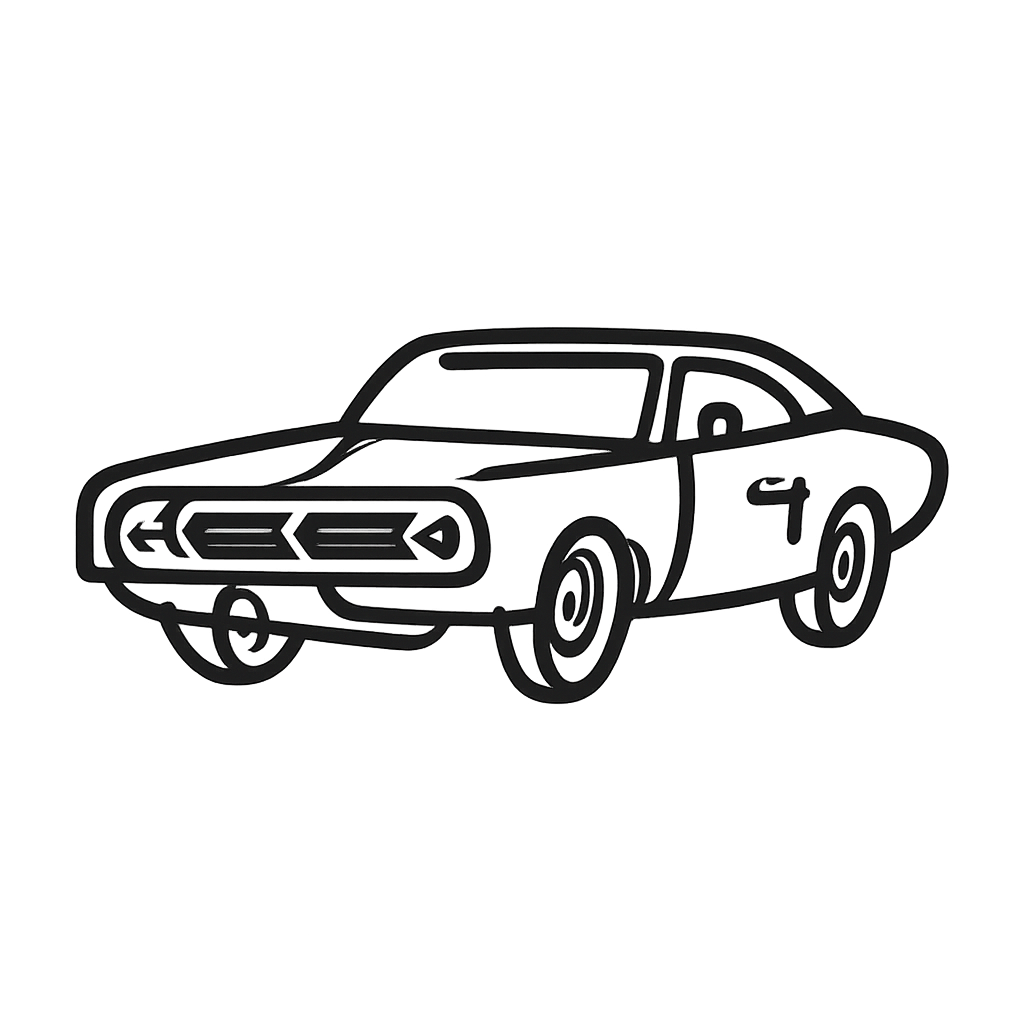
When Dodge and Plymouth unleashed icons like the Road Runner, Super Bee, Charger R/T, ’Cuda, and Challenger, the Mopar name transcended corporate branding. It became a rallying flag for speed freaks and street racers alike. The Mopar Performance catalog gave enthusiasts factory-backed access to race cams, intake manifolds, and Super Stock parts, the same kind used by legends like Sox & Martin, Dick Landy, and Don Prudhomme. By the early ’70s, Mopar meant performance, pure and simple.
Even as the muscle car era faded, the Mopar spirit refused to die. Through decades of emissions constraints, fuel crises, and corporate mergers, the name continued to represent a tribe of enthusiasts bound by one common thread, a love of Chrysler-built power. Whether it was a slant-six Dart, a 440-powered GTX, or a modern-day Hellcat, Mopar meant belonging to something greater than a brand.
Today, Mopar officially serves as the parts, service, and customer care arm for Chrysler, Dodge, Jeep, Ram, and Fiat, but to enthusiasts, it is much more. Mopar is heritage. It is an attitude. It is the unmistakable sound of a big block turning over on a cold morning, or the flash of Plum Crazy Purple under the summer sun. It is the continuation of an 80-year legacy of American engineering and rebellion.
So, whether it is a factory-fresh Ram TRX thundering across the desert or a 1968 Hemi Charger idling at a stoplight, the motto still rings true across generations: if it wears the Pentastar, it is Mopar or no car.

 Mopower Garage
Leave a reply to certainfeste2955c4ee2 Cancel reply