
Published by Christopher J. Holley | History & Tech | April 2026
Flow, Filtration, and the Truth Behind the Spin-On Wars
There are few arguments in the automotive world that refuse to die quite like the oil filter debate. It starts innocently enough, someone mentions a brand, someone else scoffs, and before long, it is a full-blown garage symposium on metallurgy, micron ratings, and “what my engine builder swears by.”
At first glance, it seems simple. It is just an oil filter. A disposable canister that threads onto the side of an engine and quietly does its job. But peel it open, literally, and you will find a world of engineering decisions hiding inside that painted steel shell.
And that is where the controversy lives.
More Than a Can of Paper
An oil filter’s job sounds straightforward: trap contaminants and keep oil flowing. But those two goals are constantly at odds.
Tighter filtration catches smaller particles but can restrict flow.
Higher flow protects at high RPM but may let more debris pass through.
The best filters walk a narrow line between the two.
Inside a premium filter, you will typically find synthetic or micro-glass media capable of capturing upwards of 99% of particles in the 20–30 micron range. That is smaller than what the human eye can see, and right in the zone where engine wear begins.
But filtration is only part of the story.
There is also:
- The anti-drainback valve, which keeps oil from draining out of the filter when the engine is off
- The bypass valve, which prevents oil starvation if the filter becomes restricted
- The internal construction, which determines whether the filter holds together under pressure or collapses when pushed
In other words, not all filters are created equal. Not even close.
The Brand Wars
Mention oil filters in any shop and a few familiar names rise to the surface.
Mobil 1 has become the modern benchmark. Its Extended Performance filters use synthetic media, offer excellent efficiency, and are built to handle long service intervals. For many, it is the “safe bet” a filter that does everything well without drama.
Then there is FRAM, a name that sparks more arguments than perhaps any other. The infamous orange can built its reputation decades ago and not always favorably. Cardboard end caps and basic filtration media left a lasting impression.
But that is only part of the story.
FRAM’s Ultra Synthetic line is a completely different animal, high-efficiency media, strong construction, and performance that rivals anything on the shelf. The problem? Many enthusiasts never updated their opinion.
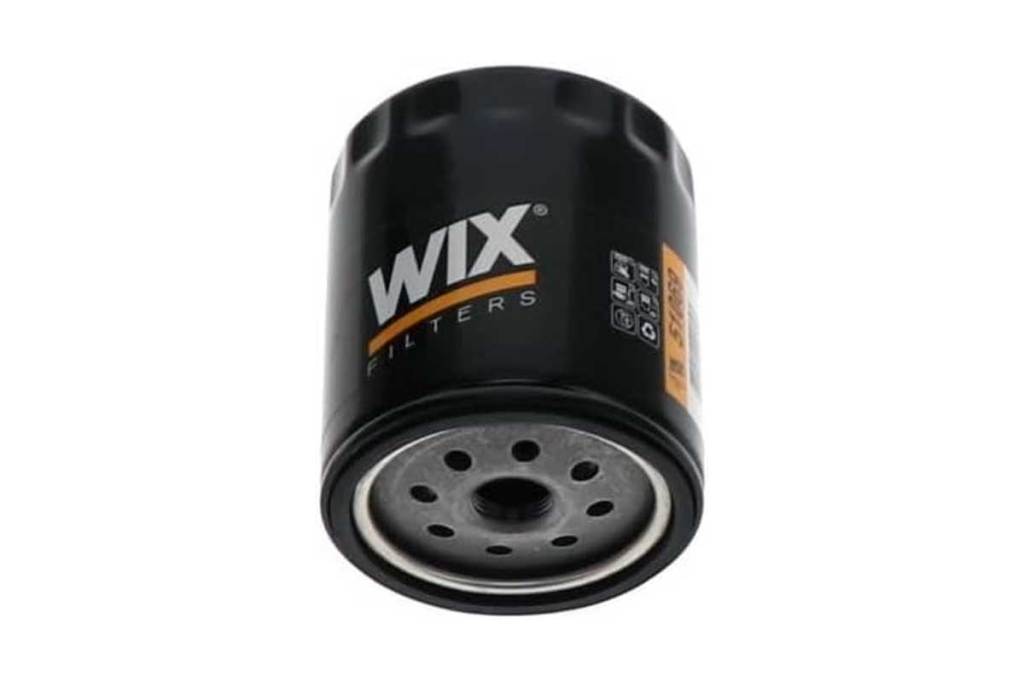
Meanwhile, WIX has quietly maintained a loyal following. Known for consistent build quality and solid flow characteristics, WIX filters have long been favored by racers and traditionalists alike. They may not chase marketing headlines, but they rarely disappoint.
And for decades, NAPA Gold filters, closely tied to WIX, became a go-to for those who wanted reliability without overthinking it.
Where the Arguments Come From
So why does the debate never end?
Because everyone is right, within their own context.
A modern daily driver running extended oil change intervals has very different needs than a big-cam, high-compression muscle car that sees weekend blasts and frequent oil changes.
A high-efficiency filter might shine in one application… and be overkill in another.
Then there is the racer’s perspective.
At high RPM, oil demand skyrockets. Flow becomes critical. In that environment, a slightly less restrictive filter can be preferable, even if it sacrifices a bit of filtration efficiency. It is a trade-off, and one that engine builders understand well.
The Classic Car Factor
For vintage engines, especially something like a late-’60s big-block, the equation shifts again.
These engines were not designed around ultra-fine filtration or extended service intervals. They thrive on frequent oil changes, good flow, and consistent oil pressure.
In that world, the “best” filter is not necessarily the most advanced.
It is the one that:
- Maintains steady flow
- Provides adequate filtration
- Holds up under real-world use
- And gets replaced regularly
Sometimes, simplicity wins.
Cutting Through the Noise
Strip away the brand loyalty, the old grudges, and the marketing claims, and a clear truth emerges:
Cheap filters are where problems live.
Premium filters, regardless of brand, are remarkably close in performance.
The difference is not as dramatic as the arguments suggest.
What matters more is how the filter fits into the bigger picture:
- Oil quality
- Change intervals
- Engine design
- And how the vehicle is actually used
Final Word
The oil filter debate is not really about filters.
It is about priorities.
Filtration versus flow. Longevity versus simplicity. Modern engineering versus old-school habits.
And maybe that is why the argument never goes away, because there is no single answer, only the right answer for the job at hand.
In the end, the best oil filter is not the one with the loudest supporters.
It is the one that quietly does its job… mile after mile, without ever asking for attention.
 Mopower Garage
Leave a comment