
Published by Christopher J. Holley | History & Tech |April 2026
By the time the straps go tight and the rollers begin to hum, most people in the room already have a number in their head. It is the number they want. The number they expect. The number they will repeat later.
The problem is that a chassis dyno does not care what number you want.
It only tells you what you asked it to measure and how you asked it.
The Theater of Horsepower
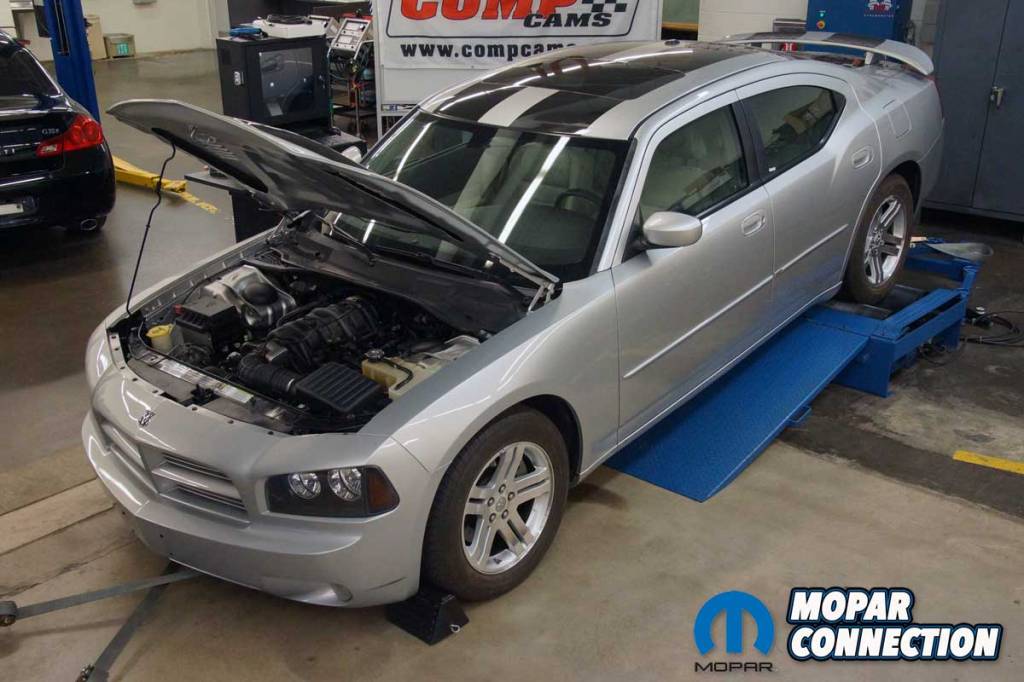
A modern chassis dyno is equal parts science lab and stage performance. Pull a car onto the rollers, whether it is a late model Hemi car or a carbureted big block from the muscle car era, and within minutes, you can produce a graph that looks authoritative, precise, and final.
Horsepower. Torque. Clean lines climbing across a screen.
It feels definitive.
But a chassis dyno is not an engine dyno. It does not measure raw engine output. It measures power delivered to the rollers after the engine, transmission, driveshaft, differential, wheel bearings, and tires have all taken their share.
That alone should give you pause.
Because what you are seeing is not just the engine. It is the entire system.
Same Car Different Truths
Put the same car on two different dynos, and you may get two different answers. Put it on the same dyno twice, with different settings, and you can get two wildly different answers.
Change the gear used for the pull.
Adjust the ramp rate.
Tighten or loosen the straps.
Alter tire pressure.
Modify how aggressively the operator loads the car.
Each change nudges the result.
Stack enough of them together, and suddenly that baseline pull looks quite different.
That is not fraud. It is physics.
A chassis dyno is extremely sensitive to load and inertia. The way the vehicle is restrained and accelerated affects how hard the drivetrain works and, therefore, how much power appears at the rollers. Even cooling airflow across the radiator and intake can change repeatability.
The dyno did not lie.
It simply answered a slightly distinct question.
The Operator Matters More Than the Machine
Ask experienced tuners, and they will tell you something uncomfortable. The most important variable in a dyno session is not the brand of dyno.
It is the person running it.
A skilled operator understands consistency. They know how to set up the car the same way every time, use the proper gear ratio for comparison pulls, control ramp rates to fit the test’s purpose, and stabilize temperatures before a run.
An inexperienced or careless operator can turn a precision instrument into a noise generator.
That is why seasoned professionals focus less on peak numbers and more on repeatable trends.
Did the modification you made add power everywhere?
Did it enhance drivability?
Did torque come in sooner?
Those answers matter more than a single headline number.
The Myth of the Magic Number
There is a reason dyno sheets get shared like trading cards. A bigger number feels like a win. It validates the parts, the money, and the effort.
But chasing a number without context is like bragging about a lap time without mentioning the track.
A five-hundred-horsepower dyno sheet means nothing without knowing the type of dyno, the correction factor used, the environmental conditions, and the test procedure.
Two cars can both claim five hundred horsepower and feel completely different on the road or the strip.
Because performance is not a number.
It is a combination of power delivery, gearing, traction, and application.
What are the Benefits of a Dyno
Strip away the noise, and the chassis dyno reveals its true purpose.
It is not there to impress your friends.
It is there to answer questions.
Did that jet change improve the air-fuel ratio?
Is the timing curve too aggressive?
Did the new camshaft shift the torque band?
Is the engine consistent, pull after pull?
Used correctly, a dyno becomes one of the most powerful diagnostic tools in the automotive world. It allows controlled, repeatable testing that the street or even the track cannot.
It turns guesswork into data.
The Honest Pull
There is a moment, just before a dyno pull begins, when everything settles. The engine idles. The straps creak slightly under tension. The operator monitors the screen.
Then the throttle opens.
The engine climbs. The rollers spin. The graph begins to draw itself in real time.
That line on the screen is not just horsepower.
It reflects setup, method, environment, and intent.
Get all those right, and the dyno becomes honest, brutally so.
Get them wrong, and it evolves into something else entirely.
Final Thought
A chassis dyno is not a judge. It does not declare winners.
It is a translator.
It converts mechanical effort into data. What you do with that data and how carefully you gather it determines whether you walk away with insight or just a number you wanted to see.
And in the end, the cars that matter most are not the ones with the biggest dyno sheets.
They are the ones that execute when it counts on the street, at the track, and under real load where no roller can follow.
 Mopower Garage
Leave a comment