
Published by Christopher J. Holley | History & Tech |May 2026
In the world of fasteners and precision assembly, few tools are more frequently misunderstood than the tap, the thread chaser, and the die. At first glance, they appear closely related, each designed to engage threads, yet their roles and proper applications differ in ways that can ultimately determine the success or failure of a project.
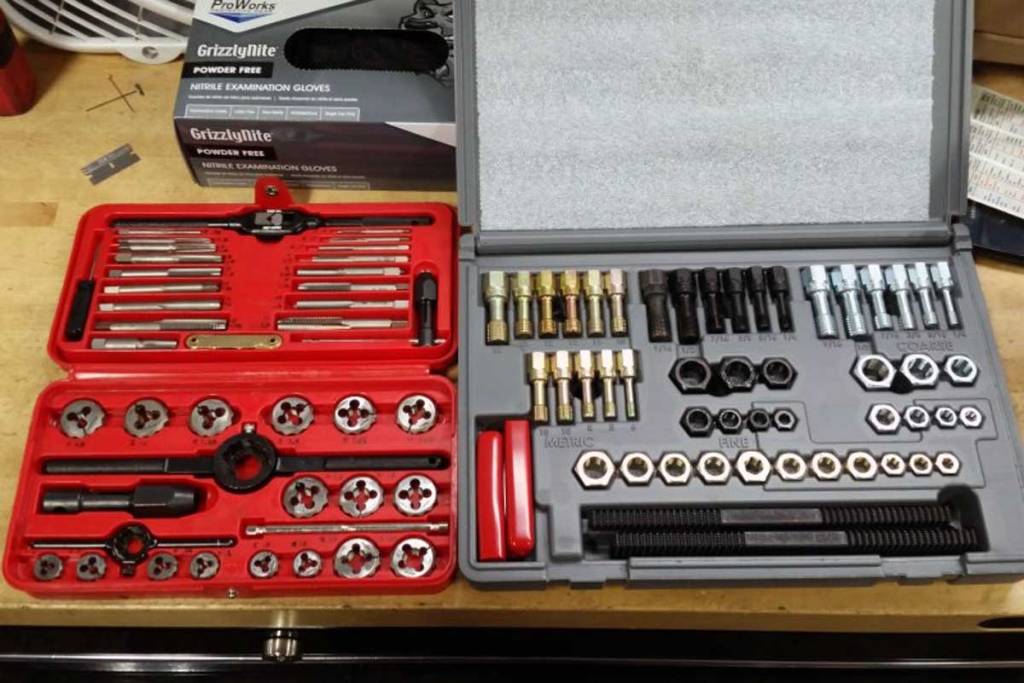
A tap is a cutting tool developed to create new internal threads within a drilled hole. After the correct hole size has been established, the tap is introduced to form threads by removing material with its sharp, fluted cutting edges. This process is fundamental when fabricating new components or preparing a part to accept threaded fasteners. Taps are produced in several configurations, including taper, plug, and bottoming styles, each intended for a specific stage of the threading operation. Their purpose is rooted in creation, converting a smooth bore into a precise, functional threaded opening.
By comparison, a thread chaser is designed not to create, but to preserve. Its role is to clean and restore existing threads without significantly altering their original form. Over time, threads can accumulate rust, debris, or residual sealant, and may experience slight deformation through repeated use. A thread chaser follows the established thread path, gently reforming and clearing imperfections while maintaining the integrity of the original dimensions. This distinction is critical. Substituting a tap in place of a thread chaser may seem efficient, but the cutting action of a tap can remove material, enlarging or weakening the threads and compromising fastener engagement. Thread chasers are available for both internal and external applications, making them essential tools in any environment where precision and consistency are required.
The die functions as the external counterpart to the tap. It is used to cut or restore threads on the outside of cylindrical components such as bolts, studs, and rods. Like a tap, a die removes material to produce threads, making it indispensable for fabricating custom fasteners or repairing damaged external threads. Adjustable split dies provide the added advantage of controlling thread fit, allowing for fine adjustments in applications where tolerances must be carefully managed.
Understanding the distinctions among these tools extends beyond simple terminology; it reflects a deeper level of craftsmanship. Using a tap where a thread chaser is appropriate can gradually degrade thread engagement, while improper use of a die can weaken external threads and reduce their reliability. In precision disciplines such as automotive engine building, where clamping force and thread integrity are critical, proper tool selection is not optional. Each tool serves a defined purpose, and when used correctly, they ensure that threaded connections remain secure, accurate, and dependable.
 Mopower Garage
Leave a comment