
Published by Christopher J. Holley | Mopar History & Tech | May 2026
The Story of Emissions Labels, Smog Laws, and the Rise of Underhood Information
Open the hood of almost any modern automobile and you will find a rectangular decal quietly attached to the radiator support, inner fender, strut tower, or underside of the hood. Most enthusiasts barely notice it anymore. It lists vacuum hose routing, ignition timing, emissions certifications, spark plug information, idle speed, and often a statement declaring compliance with federal or California regulations.
Today, that sticker is as common as the VIN plate. But its story is tied directly to one of the most dramatic transformations in automotive history: America’s war on smog.
Before the Sticker Era
In the 1940s and 1950s, automakers provided tune-up specifications almost exclusively through shop manuals and dealer service bulletins. A mechanic working on a carbureted V8 might rely on a printed chart hanging on the garage wall or a “Motors Manual” sitting on a greasy workbench.
Underhood labels were rare. Some cars carried basic lubrication charts or patent plates, but there was little standardization. Manufacturers simply did not yet face federal emissions compliance requirements.
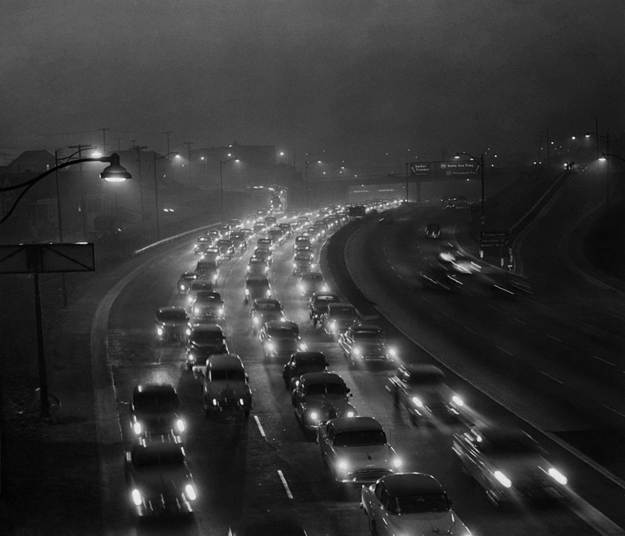
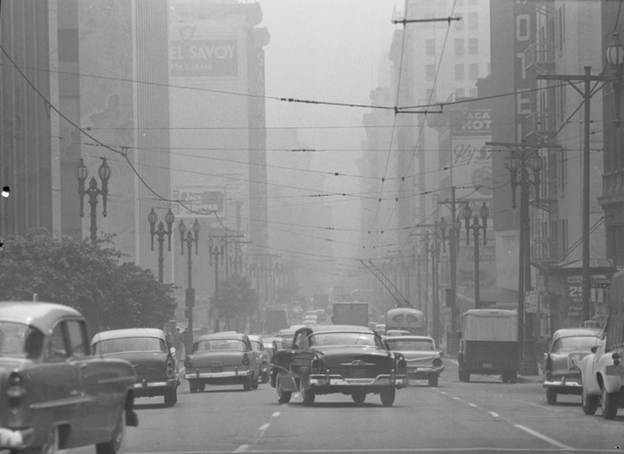
That began changing as cities, especially Los Angeles, became engulfed in smog.
California Starts the Fight
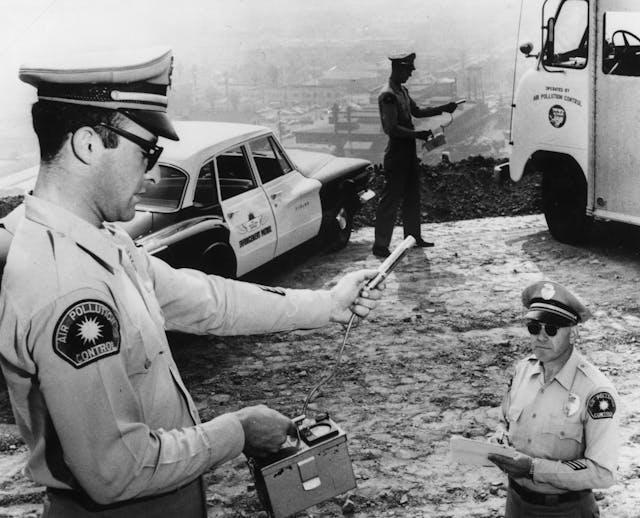
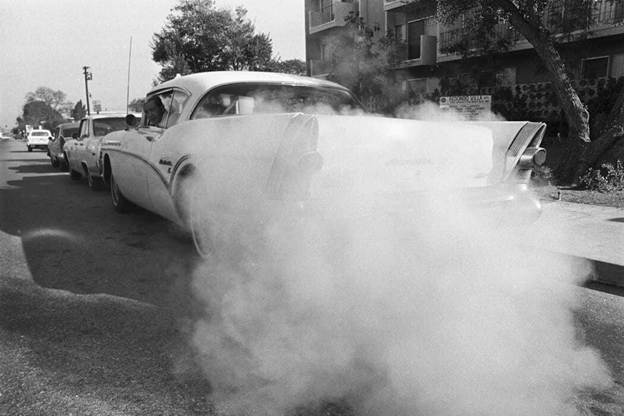
In 1961, California Air Resources Board precursor agencies began regulating crankcase emissions. California quickly became the national laboratory for emissions enforcement because its geography trapped pollution over major cities.
By the mid-1960s, cars started receiving primitive emissions devices:
- Positive Crankcase Ventilation (PCV) systems
- Air injection pumps (“smog pumps”)
- Distributor vacuum controls
- Early evaporative emissions systems
As emissions hardware became more complicated, mechanics needed a quick reference under the hood. Vacuum hoses now snaked across engines in confusing patterns, especially on V8s with multiple thermal switches and vacuum delay valves.
The solution was simple: put the information directly on the vehicle.
The Arrival of the Emissions Sticker
The first true emissions-control labels began appearing in the late 1960s, especially on California-certified vehicles. By the early 1970s, they became widespread across American automobiles.
These stickers typically included:
- Engine family identification
- Ignition timing specifications
- Idle RPM settings
- Vacuum hose routing diagrams
- Emissions certification statements
- Tune-up procedures
- Catalyst warnings
The stickers were usually mounted on:
- Inner fenders
- Radiator supports
- Fan shrouds
- Hood undersides
For mechanics, they became essential.
For restorers today, they are gold.
The Clean Air Act Changes Everything
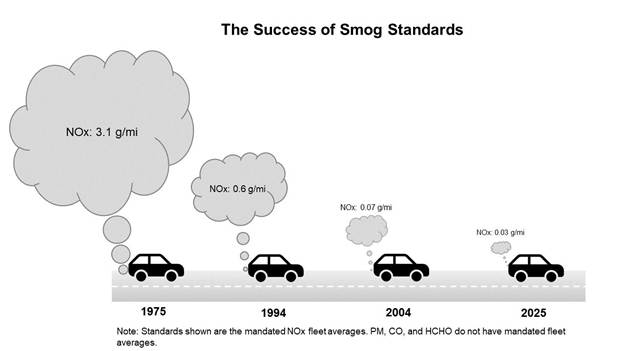
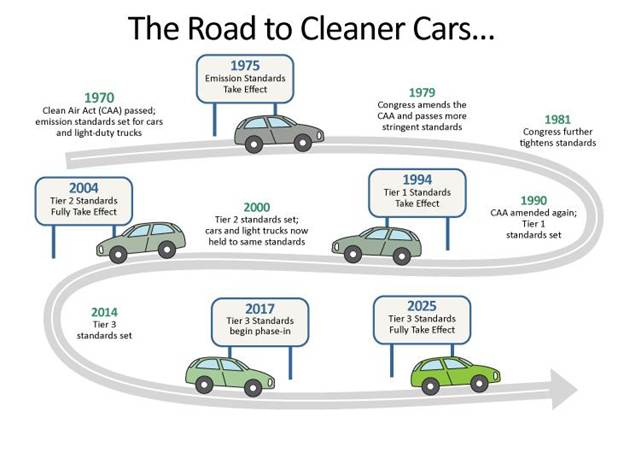
The watershed moment came with the Clean Air Act of 1970. Signed during growing environmental concern, the law established national emissions standards and dramatically increased federal oversight of automakers.
Soon after, the Environmental Protection Agency (EPA) was formed to enforce compliance.
Automakers suddenly had to prove that every engine combination met federal requirements. That meant documentation, lots of it.
The emissions sticker evolved from a simple tune-up aid into a legal certification label.
A typical label might read:
“This vehicle conforms to U.S. EPA regulations applicable to 1974 model year new motor vehicles.”
California-certified vehicles often carried separate or dual-compliance statements because standards there were stricter.
The Vacuum Hose Nightmare of the 1970s
If there was a golden age of emissions stickers, it was the mid-to-late 1970s.
This was the era of:
- EGR valves
- Thermal vacuum switches
- Air pumps
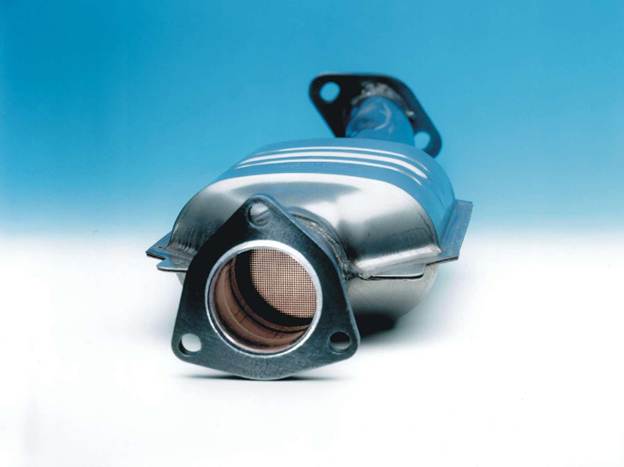
- Catalytic converters
- Lean carburetors
- Spark delay systems
Manufacturers were scrambling to meet emissions rules while still using carburetors.
The result was chaos under the hood.
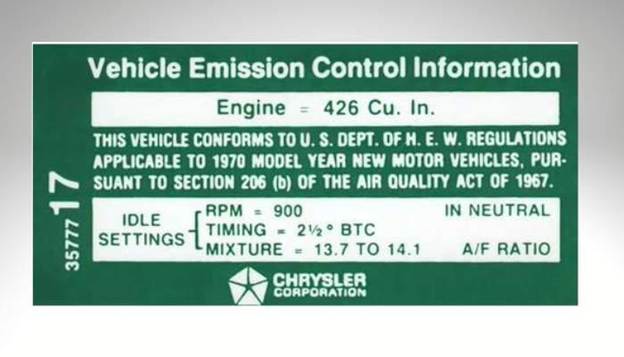
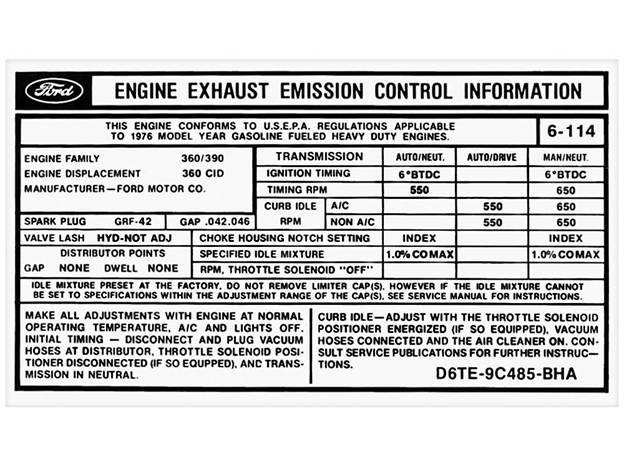
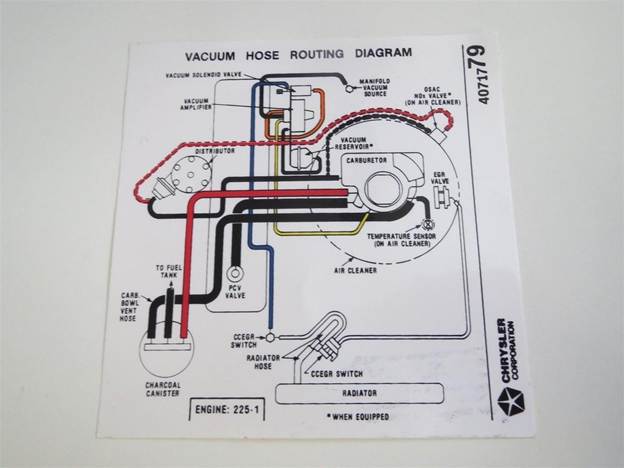
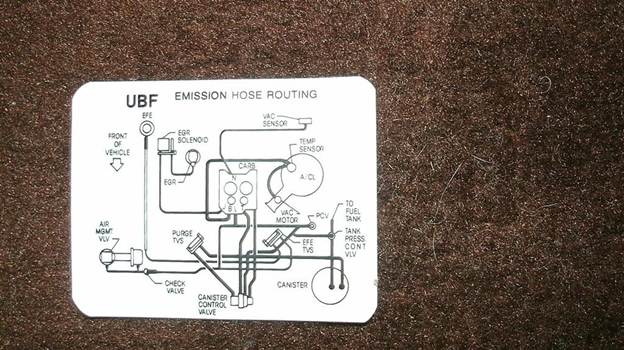
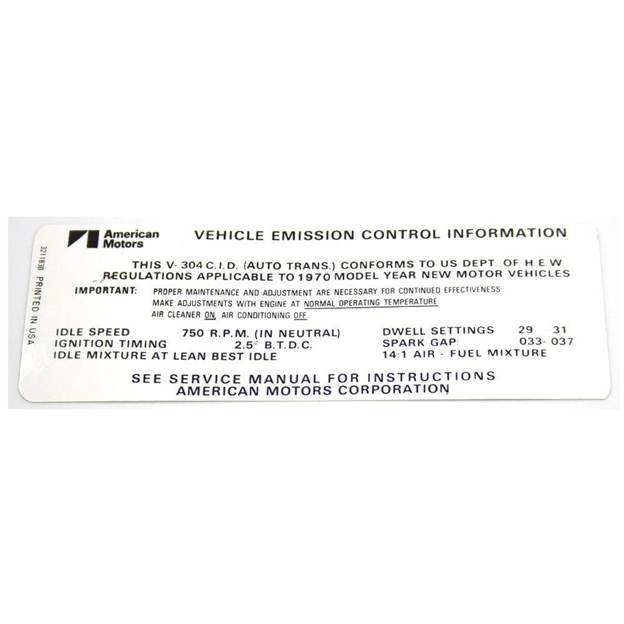
Vacuum routing decals became increasingly detailed. Some resembled subway maps more than automotive diagrams.
A 1978 California V8 might contain dozens of vacuum hoses connected to CTO switches, charcoal canisters, EGR controls, and distributor advance systems. Without the sticker, diagnosis could become nearly impossible.
Many technicians from the era joked that the emissions decal was the most important component under the hood.
Federal vs. California Labels
By the late 1970s and early 1980s, emissions labels often reflected two different regulatory worlds:
Federal Emissions Vehicles
Designed to meet nationwide EPA standards.
California Emissions Vehicles
Built to satisfy stricter California requirements under CARB authority.
The wording on the label became critically important for inspection stations and repair technicians.
Some labels specifically stated:
- “49-State Vehicle”
- “California Certified”
- “Meets California Regulations”
This distinction still matters today in restoration, registration, and collector vehicle authenticity.
The Computer Age
The 1980s changed emissions labels again.
Electronic engine controls, feedback carburetors, and eventually fuel injection transformed diagnostics. Labels expanded to include:
- Electronic timing procedures
- Diagnostic connector information
- Catalyst warnings
- Emissions family numbers
As onboard computers evolved into OBD-I and later OBD-II systems, emissions labels became more standardized and regulatory in nature.
By the 1990s, every vehicle sold in America carried a Vehicle Emission Control Information label, commonly called the VECI label.
Why Collectors Care Today
To restorers and concours judges, original emissions stickers are now historical artifacts.
A missing or incorrect decal can reduce authenticity on:
- Muscle cars
- Survivors
- OEM restorations
- Concours builds
Companies now reproduce factory-correct decals for vehicles from:
- Chrysler
- Ford Motor Company
- General Motors
- AMC and others
For Mopar enthusiasts especially, underhood decals help identify:
- California vs. Federal cars
- Original carburetor calibrations
- Correct ignition timing
- Factory emissions packages
On some rare vehicles, the emissions sticker can even help verify originality.
From Smog Control to Historical Record
Ironically, what many enthusiasts once viewed as ugly regulatory clutter has become a fascinating snapshot of automotive evolution.
The humble emissions sticker documents:
- The rise of environmental regulation
- The death of the pure muscle car era
- The complexity of carbureted emissions systems
- The transition to computer-controlled engines
It also tells a deeper story about American engineering adapting under pressure.
What started as a simple vacuum routing aid became a federally mandated information system, and eventually a permanent part of automotive identity.
The next time you open the hood of a classic car and see that faded decal on the inner fender, you are looking at more than a sticker.
You are looking at automotive history.
 Mopower Garage
Leave a comment